

What Is a Japanese Tea Wholesaler? Appraising, Drying and Blending Aracha
 Go to Japanese page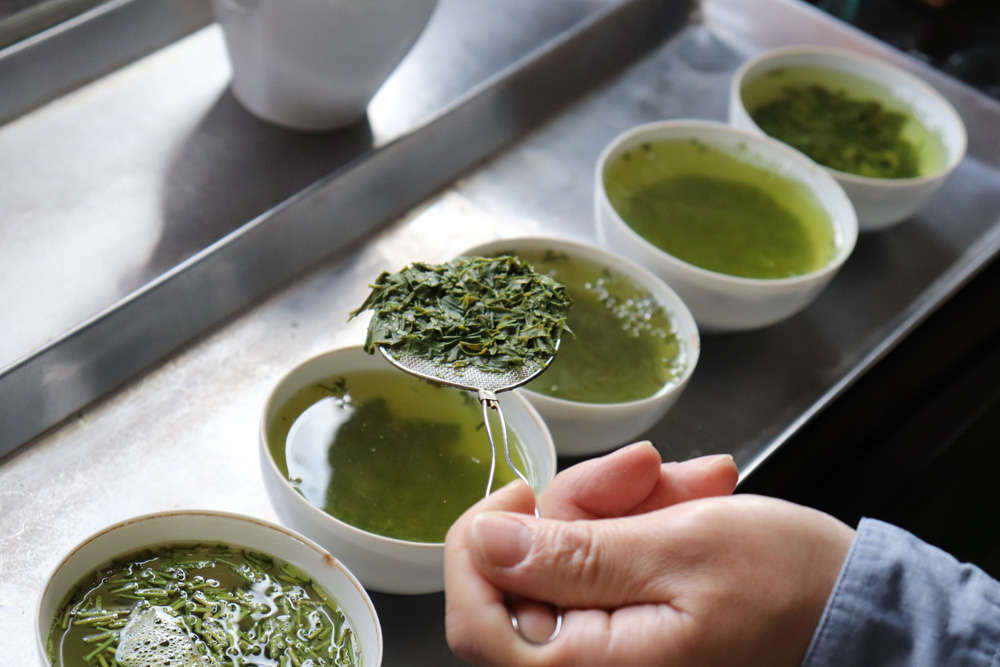
Tea leaves are picked in the fields, then steamed, rolled and dried. Yet these processes alone do not produce the Japanese tea we usually find on shop shelves. The tea produced by tea farmers and primary-processing factories is known as aracha, or unrefined tea. Tea wholesalers purchase this aracha, assess its individual qualities, and refine it through processes such as sorting, drying and blending before turning it into a finished product. Which aracha to buy, how strongly to dry it, and in what proportions to blend different teas are all decisions that affect the flavour and aroma of the finished tea. OCHATIMES, a specialist Japanese tea media platform, has visited tea wholesalers across Shizuoka Prefecture to learn first-hand about the sourcing and appraisal of tea leaves, drying, blending, product development and sales.
What these visits have made clear is that tea wholesalers are far more than intermediaries in the distribution chain. They play an important role in shaping the Japanese tea that ultimately reaches the consumer. In this article, we explore what a Japanese tea wholesaler does, following the process from sourcing and assessing aracha through sorting, drying and blending to the sale of the finished tea. Drawing on our on-site reporting, we also look at how today’s tea wholesalers are creating new points of contact with consumers through cafés, new brands and other forms of direct engagement.
What Is a Japanese Tea Wholesaler? Refining Aracha and Bringing Tea to Market
A Japanese tea wholesaler, or cha-donya, purchases aracha (unrefined tea) produced by tea farmers and tea factories, carries out the refining processes, and then sells and distributes the refined tea as a commercial product.
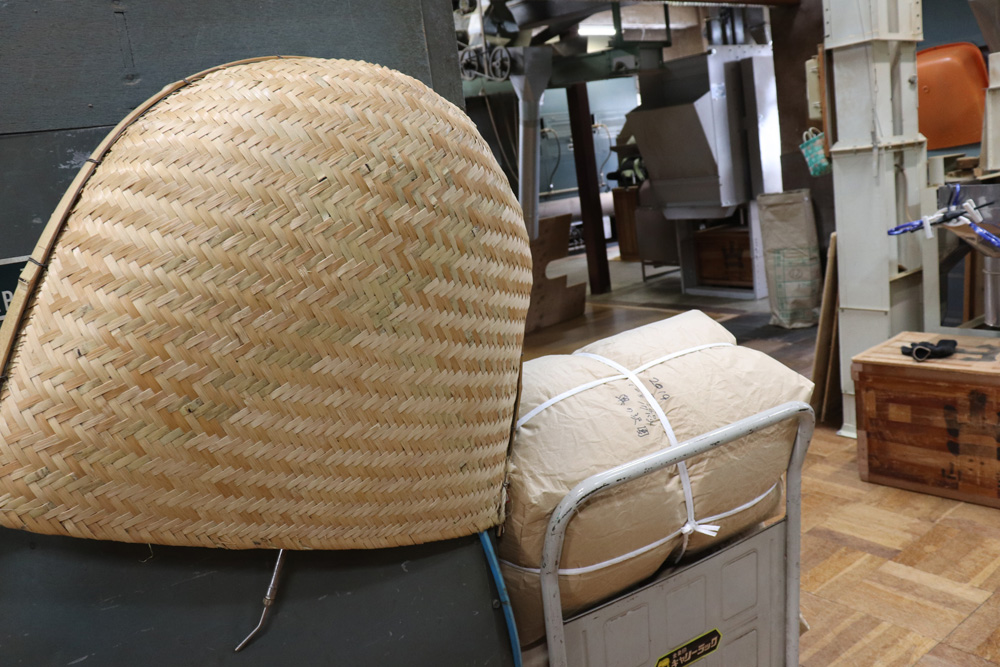
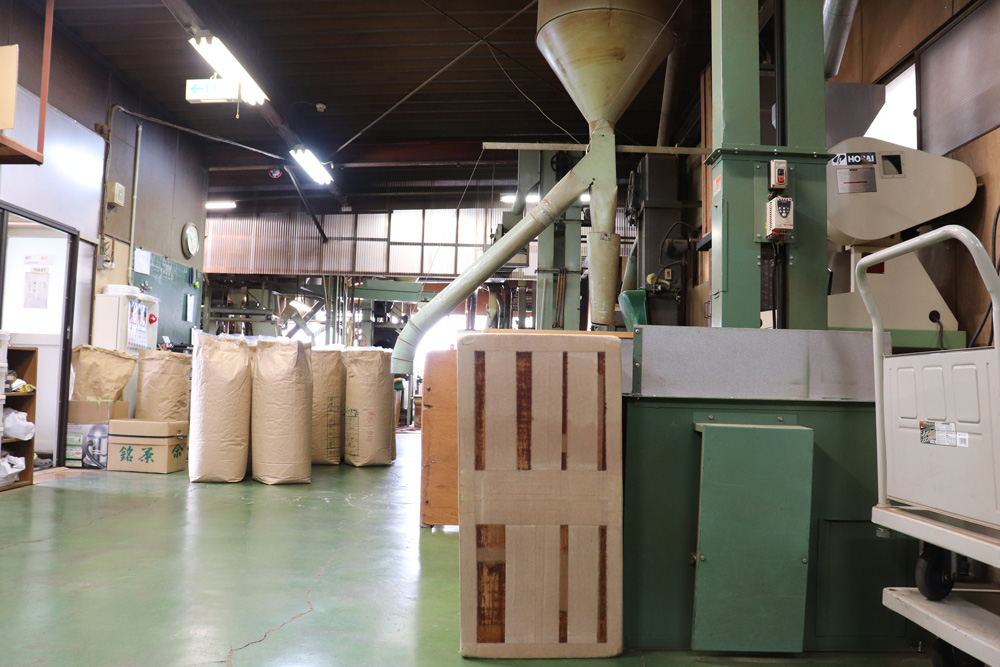
The word “wholesaler” may suggest a B2B distributor that simply buys products and supplies them to retailers. In the Japanese tea industry, however, tea wholesalers do far more than move tea leaves from one business to another.
They grade and sort the leaves by size, separate out stems and fine particles, use hiire, or drying, to develop aroma and flavour, and blend teas with different characteristics. Through these processes, aracha is transformed into refined teas such as sencha — the products we ultimately see on shop shelves.
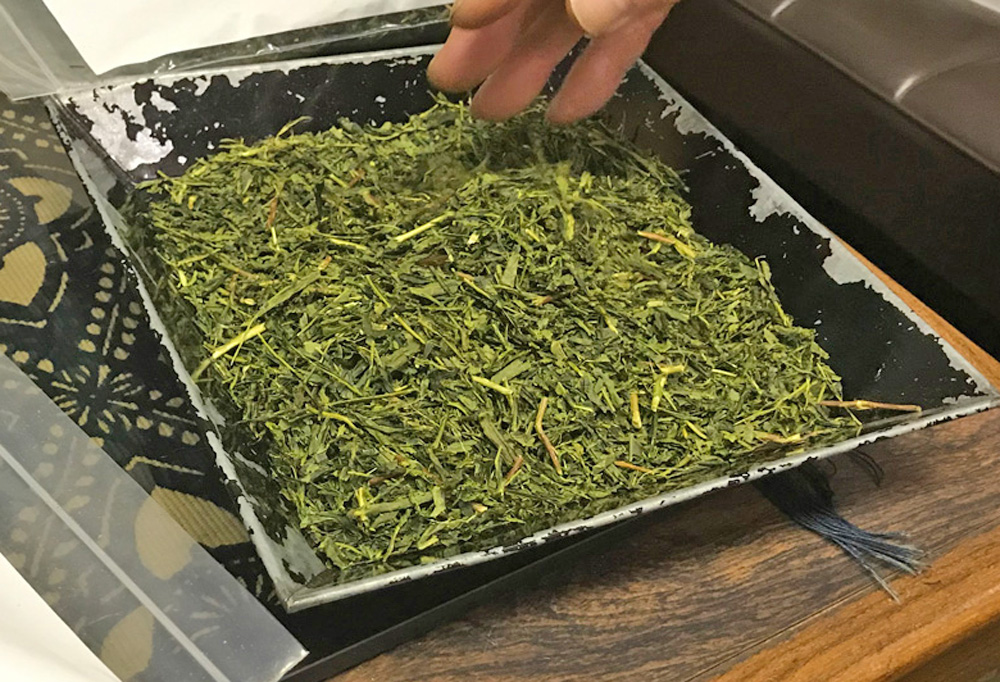 ▲Purchased aracha, or unrefined tea, is rarely sold directly to consumers in that form.
Not every tea wholesaler performs the same role, however. Today, the business takes many different forms. Some companies specialise primarily in refining aracha. Others focus on producing hojicha, drawing on their expertise in high-temperature roasting. Some concentrate on wholesale distribution, while others sell overseas. There are also companies that develop their own brands and operate retail shops or online stores.
In recent years, some tea wholesalers have also begun opening cafés and sharing information through social media, creating direct points of contact with consumers. Among the businesses OCHATIMES has visited are tea wholesalers that continue to preserve traditional sourcing and refining techniques while finding new ways to bring their tea directly to the people who drink it.
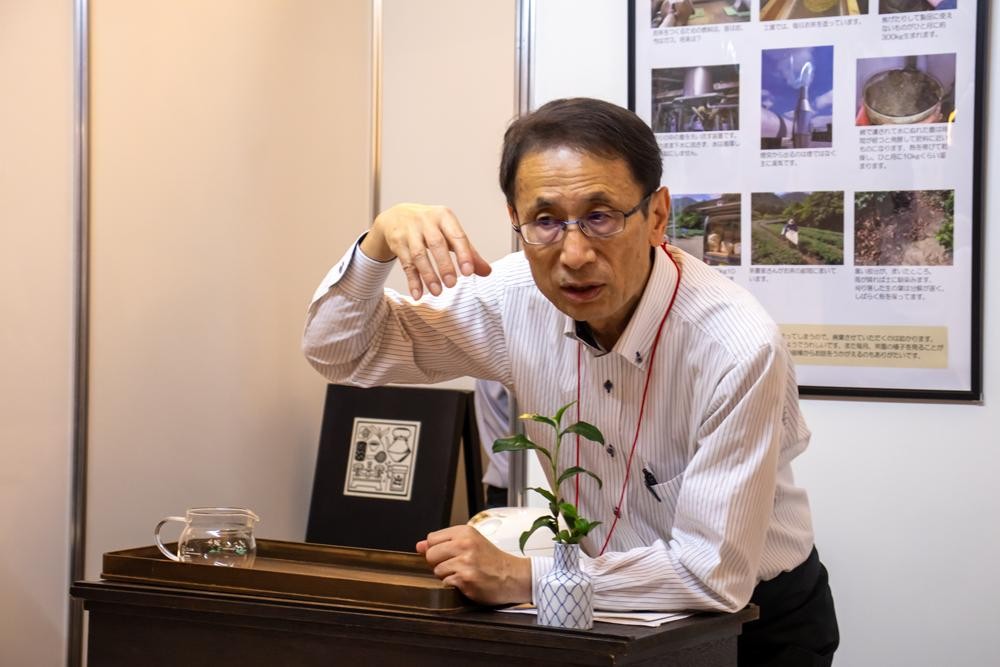 ▲Hiroyuki Yamanashi, director of Yamanashi Shoten, leading a tea workshop at the World O-CHA Festival.
What Is a Chashi? | The Craftsperson Who Shapes a Tea Wholesaler’s Flavour
When learning about Japanese tea wholesalers, you may come across the term chashi. The word is used in several different ways, but within today’s tea trade it can refer to a highly skilled professional responsible for assessing aracha (unrefined tea), selecting and purchasing teas, sorting, drying, refining and blending them.
Even when the same equipment is used and the tea is dried at the same temperature, the finished product will not necessarily taste the same. This is where the skill, experience and judgement of individual chashi and tea wholesalers become apparent.
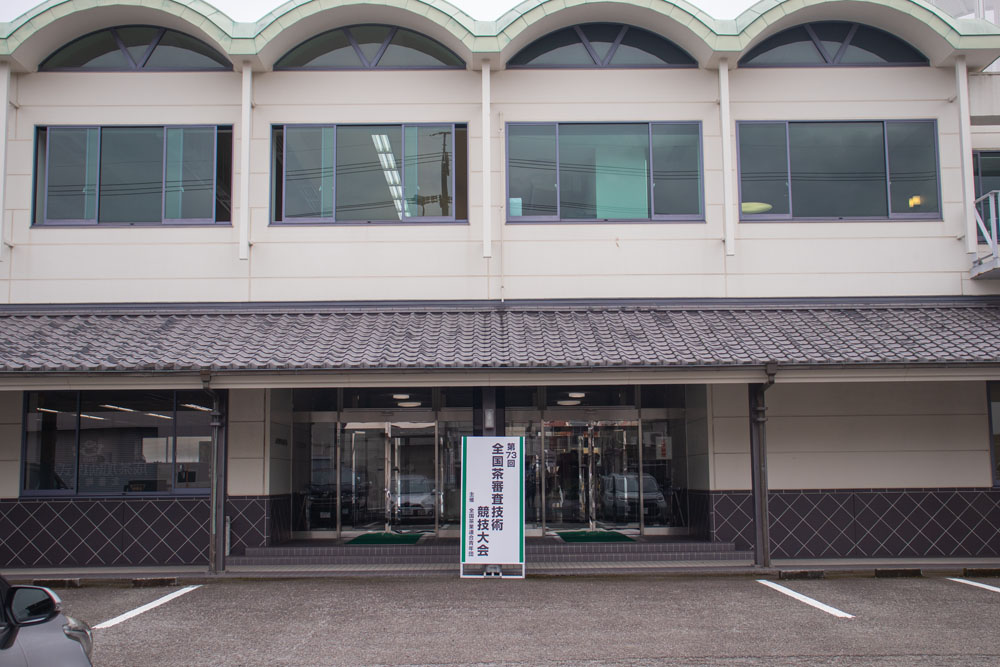
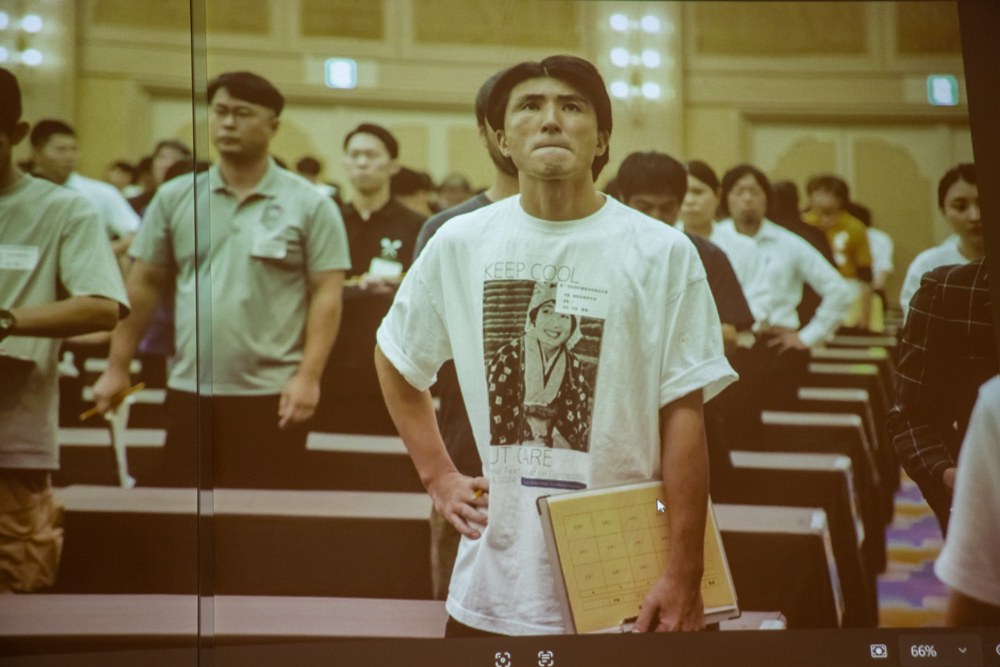 ▲The National Tea Appraisal Skills Competition brings together young tea professionals from tea wholesalers across Japan to test their ability to assess and evaluate tea. At the 2024 competition, Natsuki Wada of a Shizuoka tea wholesaler took first place.
Tea sold under a wholesaler’s name therefore reflects more than the origin or cultivar of the leaves used. It also carries the individual judgement of the chashi responsible for refining the tea — in particular, their own sense of what makes a tea taste good.
Shizuoka: A Centre of Tea Production, Distribution and Processing
Shizuoka is one of Japan’s leading tea-producing regions, but it is also a major centre for the distribution and processing of tea from across the country. During the Meiji period (1868–1912), Shizuoka’s tea industry expanded significantly with the opening of the Tokaido railway line and the growth of tea exports through Shimizu Port. A predecessor of today’s Shizuoka Railway also played a role in transporting tea between Shimizu Port and the Anzai and Chamachi districts, where many tea wholesalers were based.
A region where tea is grown.
A market where tea is gathered.
Tea wholesalers with the expertise to assess its quality.
A transport network to move it.
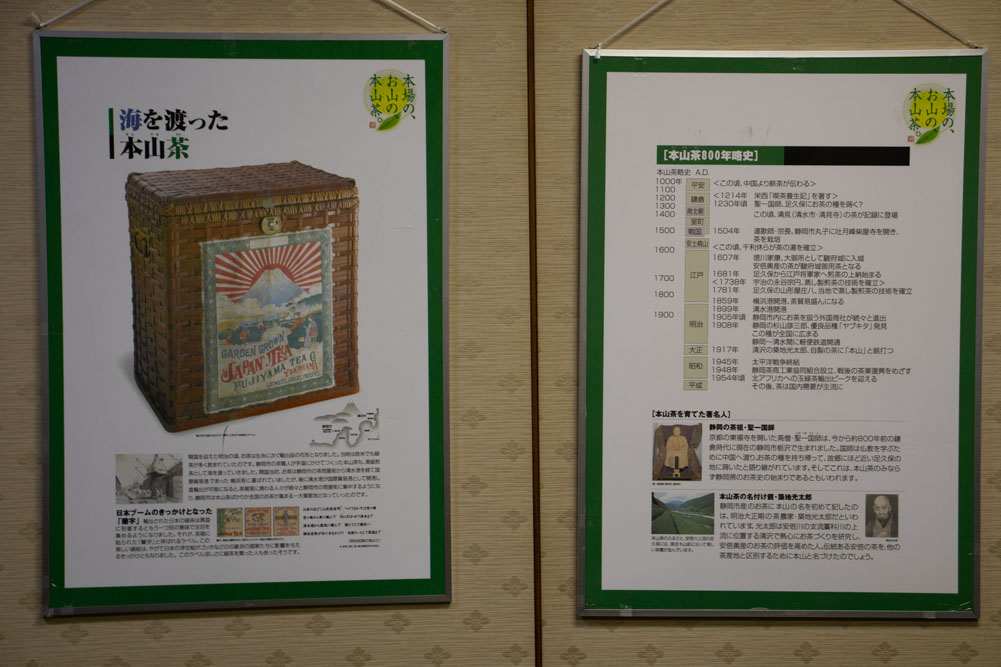
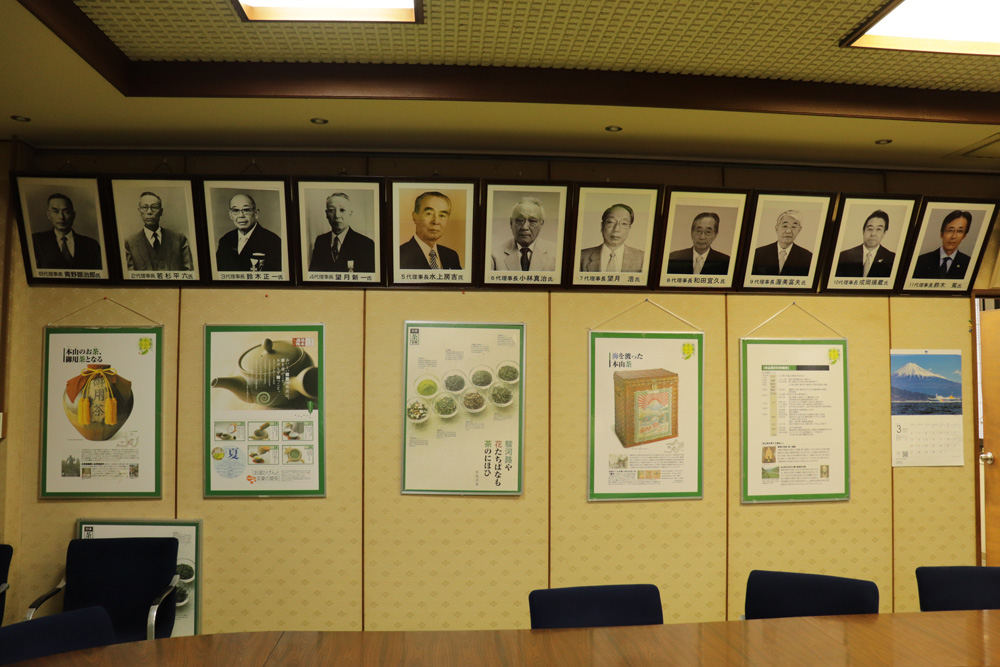
The combination of these functions allowed Shizuoka to develop beyond its role as a tea-producing region and become an important centre for the distribution and processing of Japanese tea.
Even today, areas such as Chamachi and Anzai in central Shizuoka City remain home to numerous businesses connected with the tea trade. Tea wholesalers and other tea-related companies are also concentrated around the Shizuoka Tea Market, where aracha, or unrefined tea, is traded during the new-tea season.
What Is the Difference Between a Tea Farmer and a Tea Wholesaler? Traditional Roles and How They Are Beginning to Overlap
The work of a tea farmer begins in the tea fields, cultivating tea plants (Camellia sinensis) and producing freshly harvested tea leaves. Farmers who operate their own processing facilities may also steam, roll and dry the harvested leaves to produce aracha, or unrefined tea.
Tea wholesalers, by contrast, have traditionally purchased aracha and carried out processes such as sorting, drying and blending before turning it into finished tea for sale.
Broadly speaking, the relationship can be summarised as follows:
Tea farmer: tea field → fresh tea leaves → aracha
Tea wholesaler: aracha → sorting, drying, blending and other refining processes → finished tea → sale
Traditionally, Japan’s tea industry has operated through this division of labour. Tea farmers manage the land and tea plants and produce the tea leaves, while tea wholesalers assess those leaves, refine them and shape the flavour of the final product. Through this system, the work of both has contributed to the cup of tea that ultimately reaches the consumer.
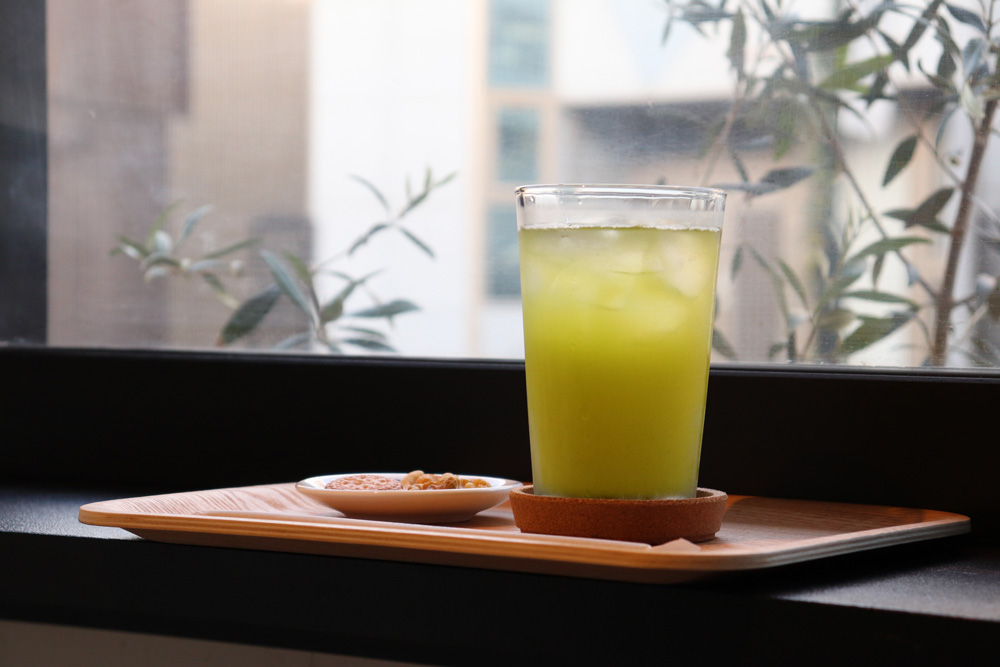
Today, however, the boundaries are less distinct. Some tea farmers now follow a model known as jien jisei jihan, growing, processing and selling their own tea. Tea wholesalers may also operate their own retail shops or cafés. In practice, the roles of farmers and wholesalers now overlap in certain areas.
For this reason, it is increasingly difficult to understand the modern Japanese tea industry simply by asking whether it is the farmer or the wholesaler who “makes” the tea.
For a closer look at the work of Japanese tea farmers and the different ways they cultivate, process and sell tea, see “Japanese Tea Farms: How Tea Farmers Grow, Process and Sell Tea in Japan”.
Where the Work of a Japanese Tea Wholesaler Begins | From Aracha to Refined Tea
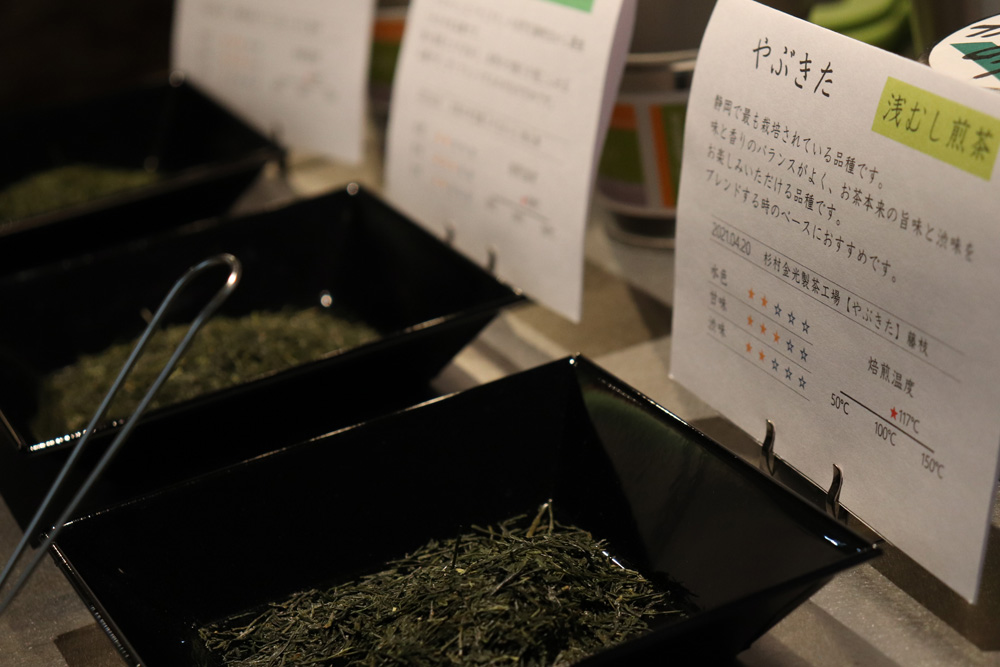
For steamed Japanese green teas such as sencha, freshly harvested leaves are steamed, rolled and dried to produce aracha, or unrefined tea. At this stage, the tea is suitable for storage and distribution, but the leaves vary in size and still contain stems and fine particles.
Once a tea wholesaler has purchased the aracha, it undergoes further processing. The wholesaler assesses the character of the tea, sorts it and applies hiire, or drying, to refine its aroma and flavour. Where appropriate, different teas may also be blended, or gogumi, to create the desired balance of flavour, aroma and appearance for the finished product.
In this way, tea wholesalers play an important role in taking the aracha produced by tea farmers and refining it into the finished tea that ultimately reaches the consumer.
The Work of a Tea Wholesaler ① Expert Appraisal | Refining Begins with Assessing Aracha
The work of a tea wholesaler begins with a fundamental decision: which aracha to buy. Aracha, the unrefined tea that forms the basis of sencha, varies from batch to batch. Unless these differences can be accurately identified, it is impossible to judge how the tea should later be dried or blended. The ability to assess the leaves precisely is therefore the starting point of a tea wholesaler’s refining expertise.
When purchasing aracha, wholesalers consider information such as where and when the tea was produced, its cultivar and the methods used to process it. They then examine the tea itself — looking at and handling the leaves, checking their aroma, the colour of the infusion and the overall flavour — to understand the characteristics of each batch.
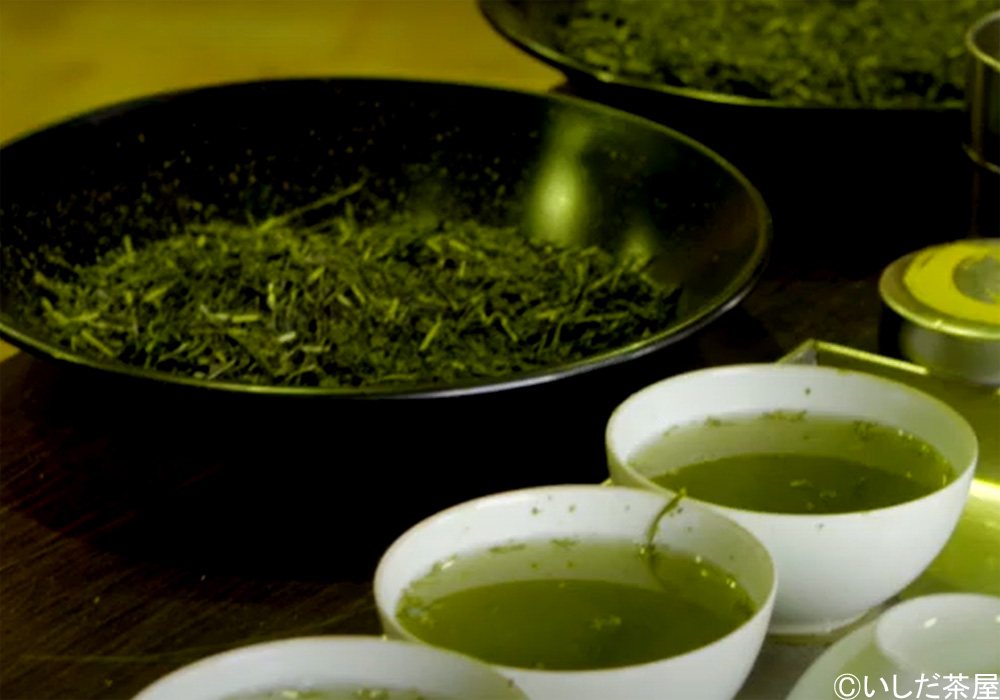
Tea, however, is an agricultural product. Even when it comes from the same region and the same cultivar, its condition changes from year to year depending on factors such as the weather, harvesting period, cultivation methods and processing techniques. This means that even if a wholesaler wants to recreate the same product as the previous year, it is not possible simply to buy exactly the same aracha again.
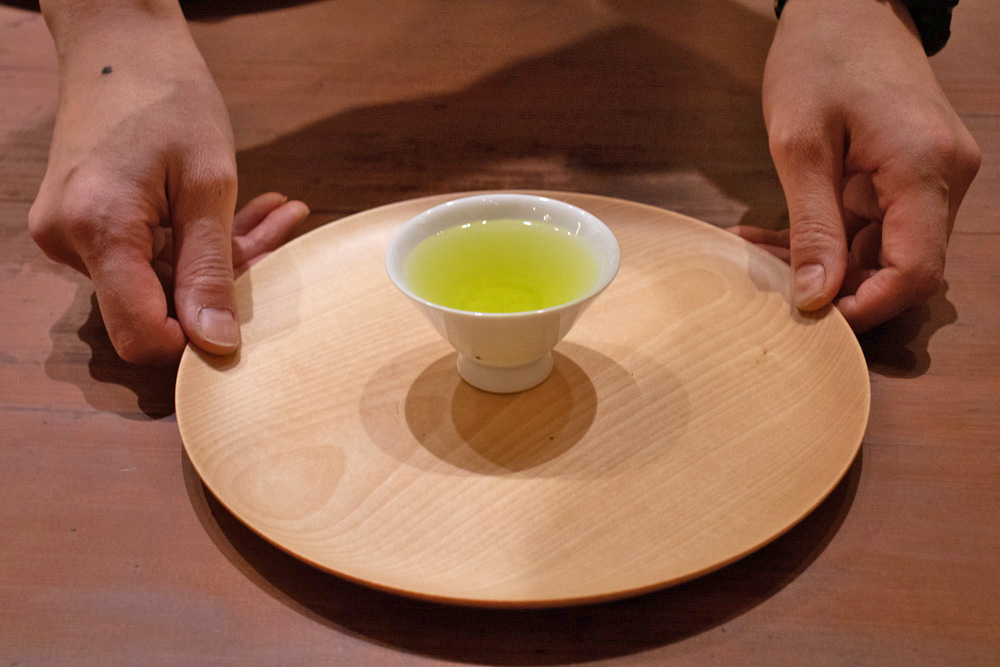
This is where mekiki — the trained judgement used to assess tea — becomes essential. Those involved in purchasing and refining tea examine the leaves, feel them between their fingers, check their aroma, brew them and observe the colour of the infusion, before finally assessing the flavour. By identifying the qualities of each aracha in this way, they determine how that particular tea can best be used.
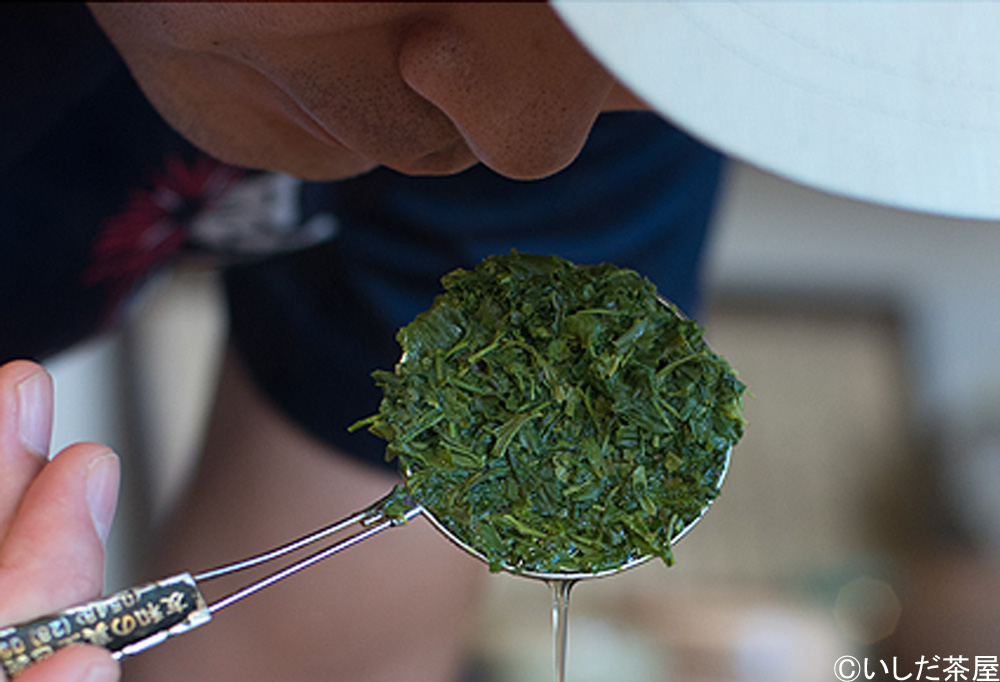
Such judgement depends not only on the senses of taste and smell, but also on years of experience observing tea that changes with every harvest. As noted earlier, teas from producing regions across Japan have long been brought to Shizuoka. It is said that this environment, in which tea merchants were routinely exposed to a wide range of teas, provided the foundation on which their appraisal skills were developed.
Tea Wholesalers at Work ② Sorting | Separating Aracha to Make the Most of Each Part
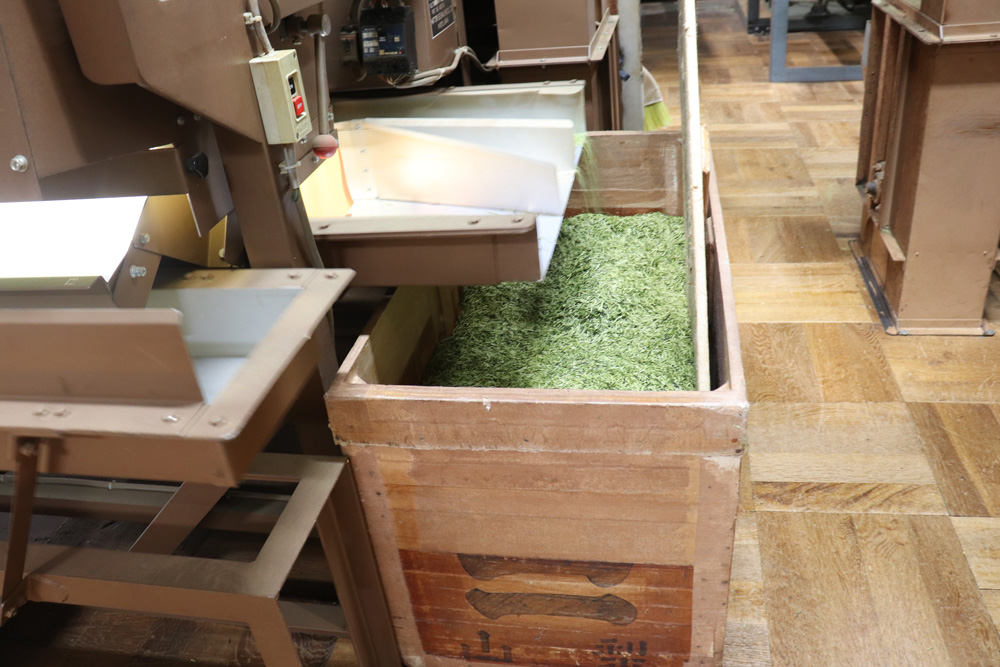
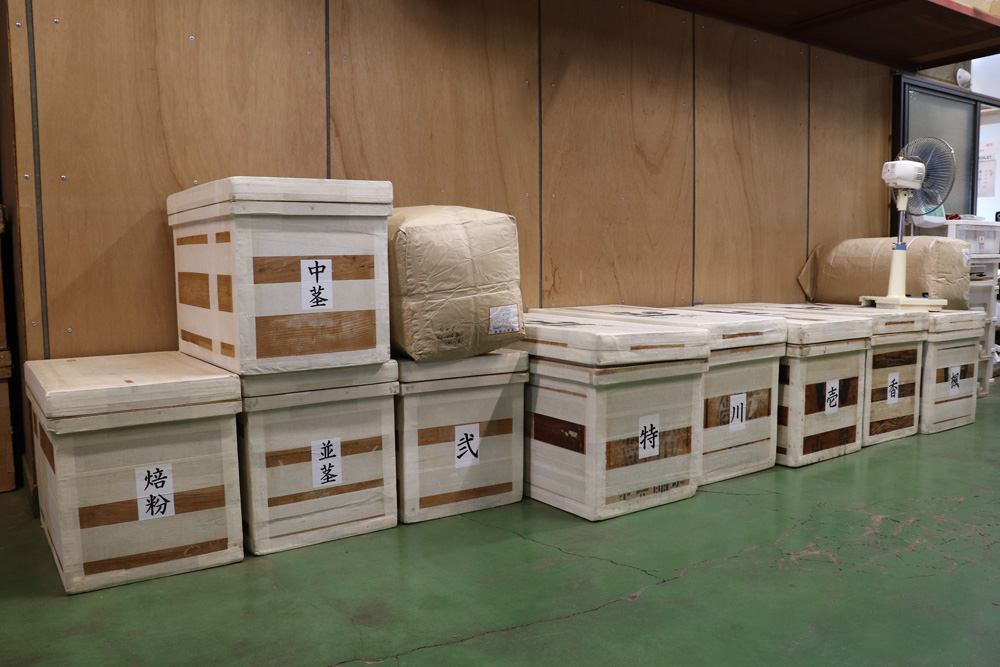
Aracha contains tea leaves of different shapes and sizes, along with stems and fine particles. During the sorting process, sieves and other equipment are used to separate the leaves by size and grade them into more uniform sizes.
The stems and fine particles separated at this stage are not simply discarded as unwanted material. They may instead be used to make products that take advantage of their individual characteristics, such as stem tea or konacha, a tea made from the finer particles.
Sorting is therefore more than simply separating the leaves. It is also a process of identifying the particular qualities of the different parts found in aracha and making use of them in finished tea products.
The Work of a Tea Wholesaler ③ Hiire (Drying) | Bringing Out the Aroma and Flavour of the Tea Leaves
Hiire, or drying, is the process of heating aracha to further reduce its moisture content while bringing out the aroma and flavour inherent in the tea leaves. The way in which the tea is dried can produce markedly different flavour profiles.
The tea wholesaler must decide how much heat to apply to each batch of leaves, at what temperature, and for how long. Even small differences in temperature, as well as changes in the day’s temperature and humidity, can affect the character of the refined tea. Depending on these decisions, the process may preserve a fresh, green aroma or bring out more toasted and sweet notes.
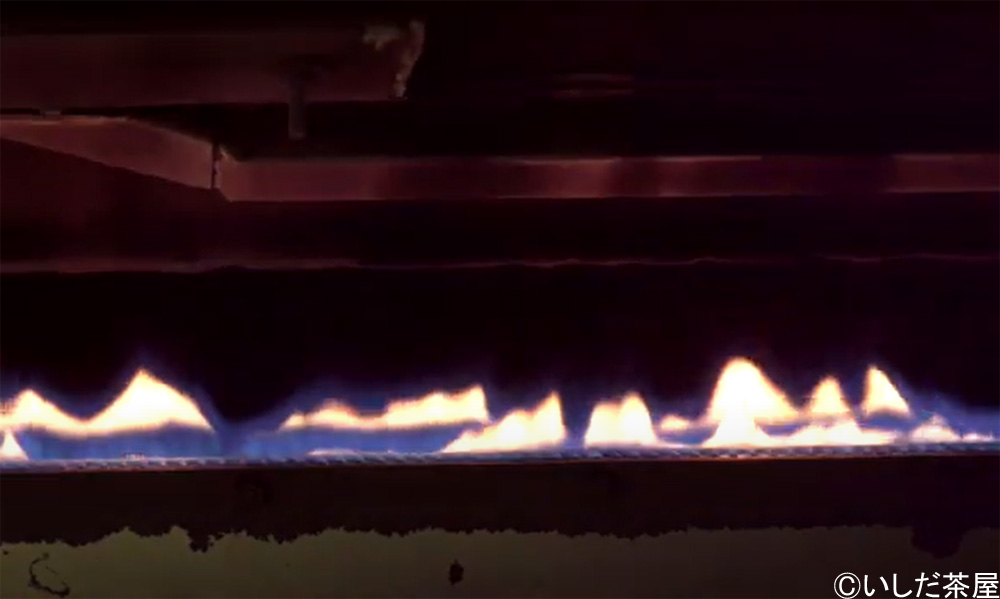
Hiire, then, is more than simply a drying process. It is the stage at which the wholesaler determines how best to draw out the qualities already present in the tea leaves. Among the various refining processes, it is one of the most important in shaping the tea’s final aroma and flavour.
Drying Centred on Sweetness | The Flavour Ishida Chaya Seeks
Ishida Chaya, a tea wholesaler and processor in Mori, Shizuoka Prefecture, places particular importance on drying.
Ishida Chaya describes the work of a tea wholesaler as comprising three main processes:
Procuring aracha, or unrefined tea.
Drying, in which the aracha is heated to bring out its aroma and flavour.
Blending, in which different teas are combined.
Of these, drying is considered especially important.
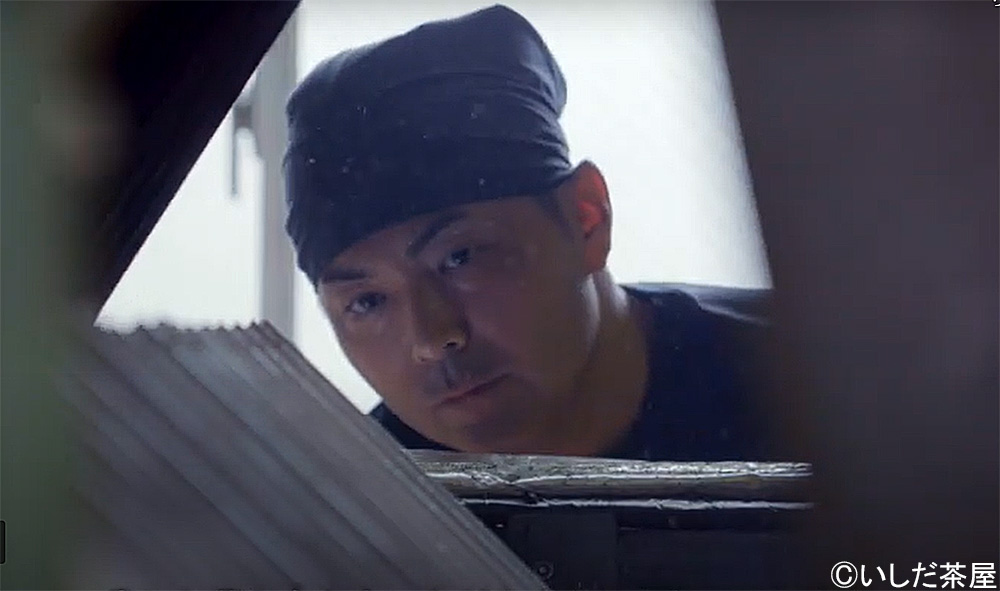
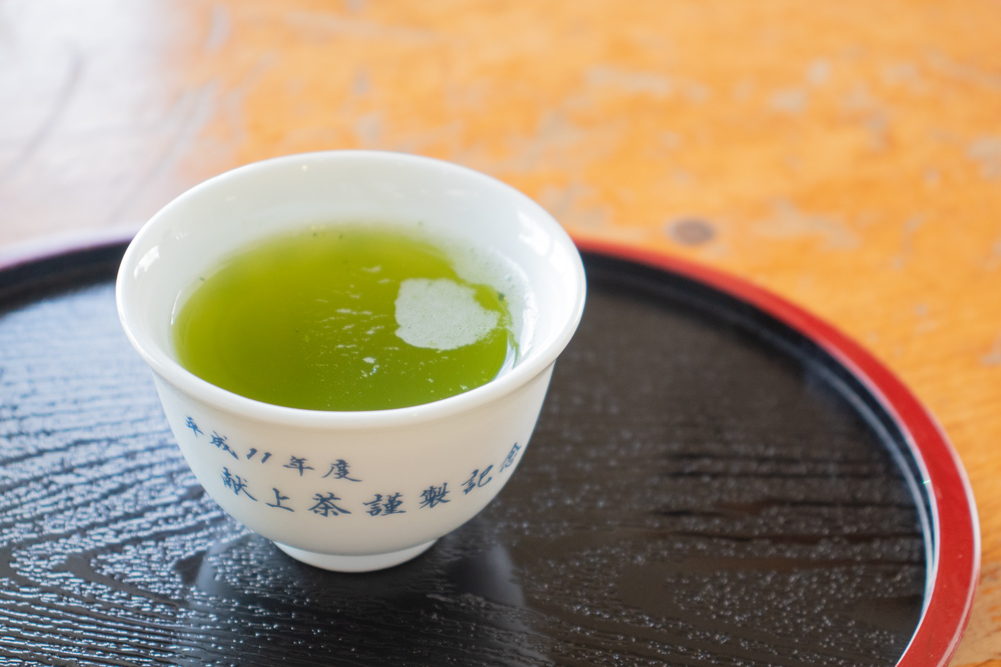
Ishida Chaya aims to produce tea with sweetness at its core, balanced by aroma, umami, astringency, depth and a lingering finish.
The Work of a Tea Wholesaler ④ Gogumi (Blending) — Creating Flavour and Maintaining Consistent Quality
One of the defining skills of a Japanese tea wholesaler is gogumi, or tea blending. This is far more than simply mixing several teas together. Drawing on years of experience and technical knowledge, wholesalers assess the individual qualities of aracha — unrefined tea that may differ in origin, cultivar, steaming method and other characteristics — and combine selected teas to achieve a particular result.
Some teas may have an especially fine aroma, others a vivid liquor colour, pronounced umami and body, or a clean, refreshing finish. Each may have its own strengths when enjoyed alone, but by understanding these characteristics, combining the teas in carefully judged proportions and applying the appropriate refining process, a wholesaler can create greater depth and complexity than would usually be possible with a single tea.
Blending also serves another important purpose: maintaining consistency from one batch to the next. Tea is an agricultural product, so its quality is never exactly the same every year. Temperature, rainfall, sunlight, harvest timing, cultivation methods and processing conditions can all affect the flavour and aroma of the finished leaf.
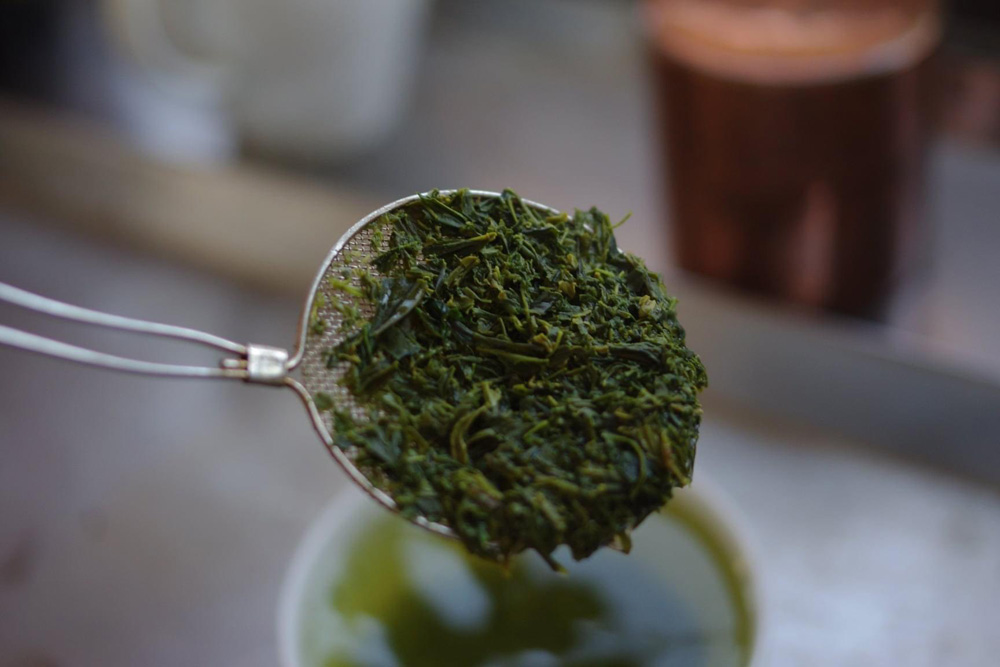
For established products that customers have bought for many years, however, a noticeably different flavour from the previous year may feel unfamiliar. Tea wholesalers therefore assess the characteristics of the teas available in each season and adjust the blend so that the finished product retains the quality and flavour profile expected of it.
In this sense, gogumi is both a technique for creating better-tasting tea and a means of maintaining consistent product quality.
Reconstructing Flavour and Aroma at Chaya Suzuwa | Creating Taste and Fragrance through Gogumi
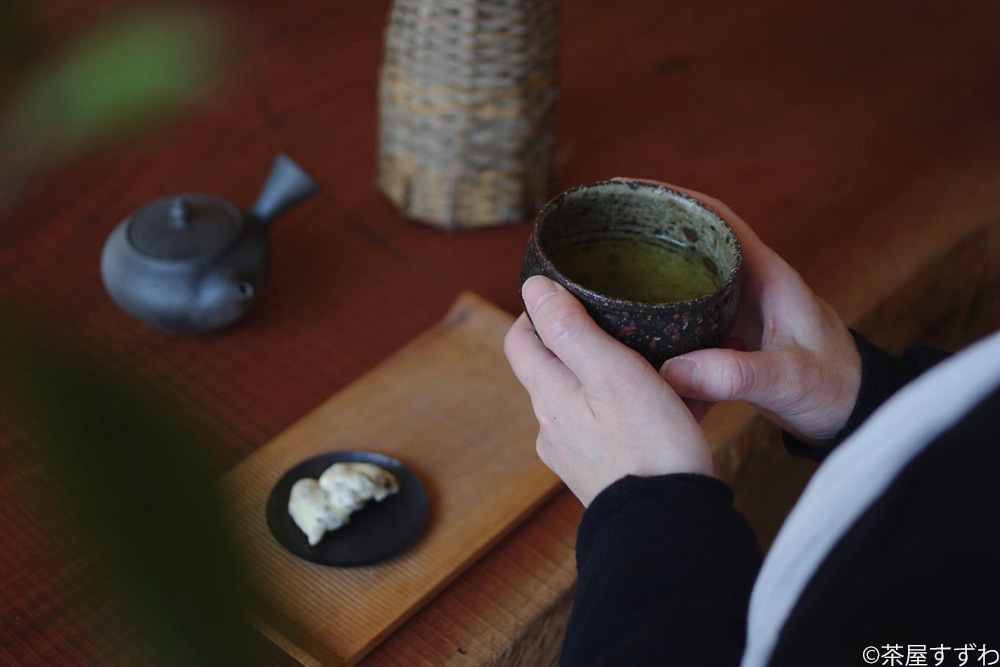
At Chaya Suzuwa (Suzuwa Shoten), a long-established tea wholesaler in Shizuoka City visited by OCHATIMES, gogumi — the practice of blending different teas — is regarded as one of the tea wholesaler’s essential skills. In recent years, single-origin teas have also attracted growing interest, allowing drinkers to appreciate the distinctive character of a particular farm, region or cultivar.
Suzuwa Shoten, however, believes that there are flavours that can only be created through gogumi: understanding the individual qualities of different teas and bringing their respective strengths together.
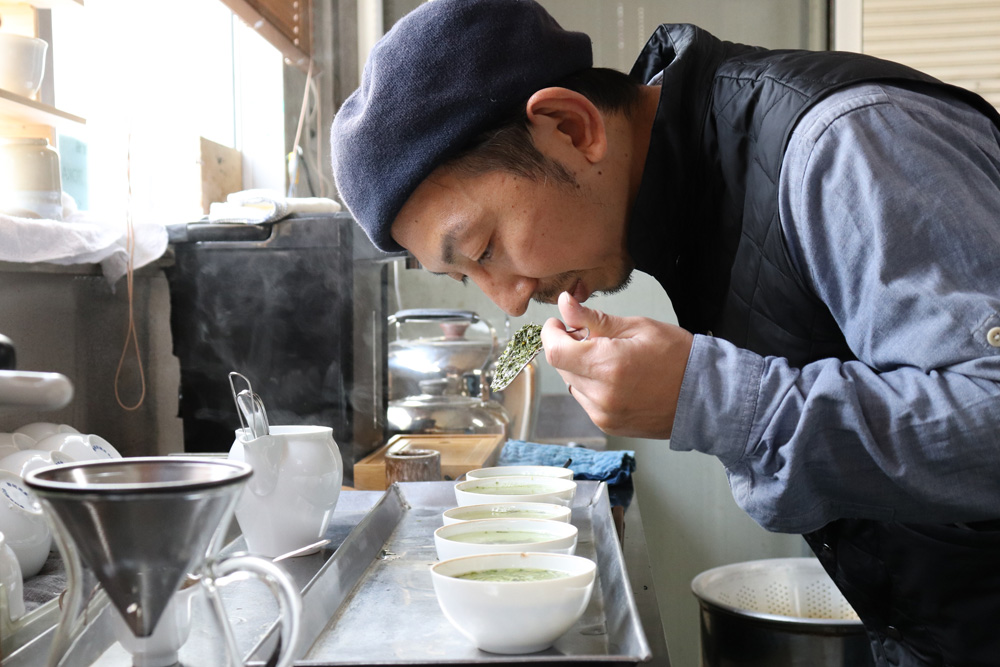
Aroma, umami, liquor colour and finish. Teas with different strengths are carefully combined, then dried and further refined to bring out their full character. At Chaya Suzuwa, this work is seen not simply as blending, but as a process of ‘reconstructing the flavour and aroma’ of the tea.
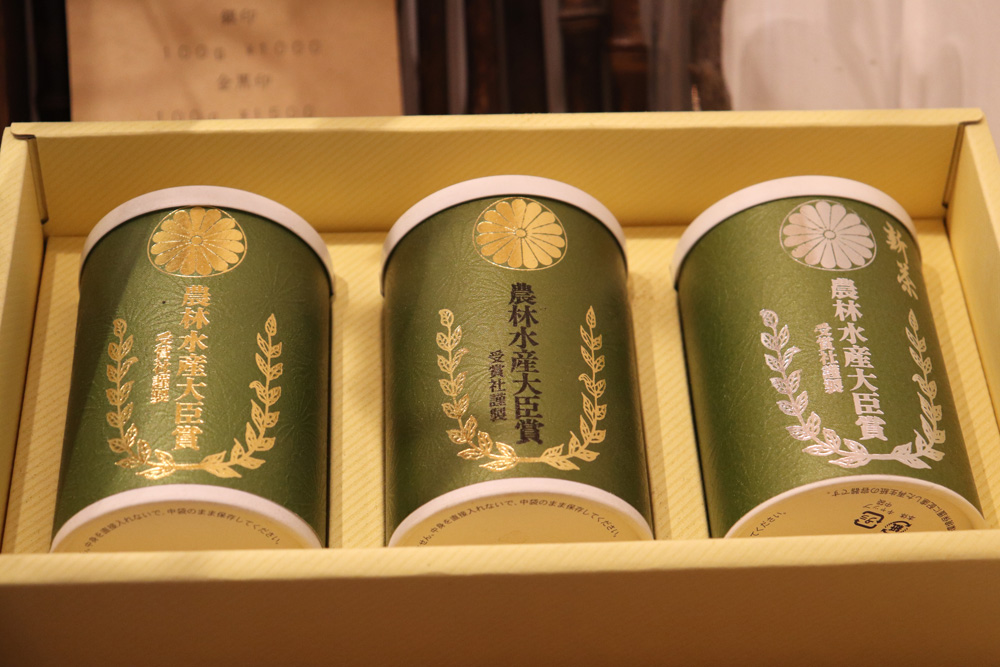
The Role of Tea Wholesalers in the Age of Single-Origin Tea
In recent years, single-origin Japanese teas — produced from a particular farm, growing region or cultivar — have become increasingly visible. Their appeal lies in the opportunity to experience the distinctive character of a particular producer, place or cultivar more directly.
As more tea farmers produce, process and sell their own tea, and as single-origin teas place greater emphasis on the identity of the farm, region and cultivar, some may wonder whether tea wholesalers are still necessary. There are undoubtedly qualities that only a tea farmer can express: the character of a particular place, harvest year and cultivar.
Yet tea produced by farmers and tea finished by tea wholesalers offer different kinds of value. Tea wholesalers work across teas from many regions and producers, assessing their individual qualities and combining different lots to bring out their respective strengths and create a balanced finished product.
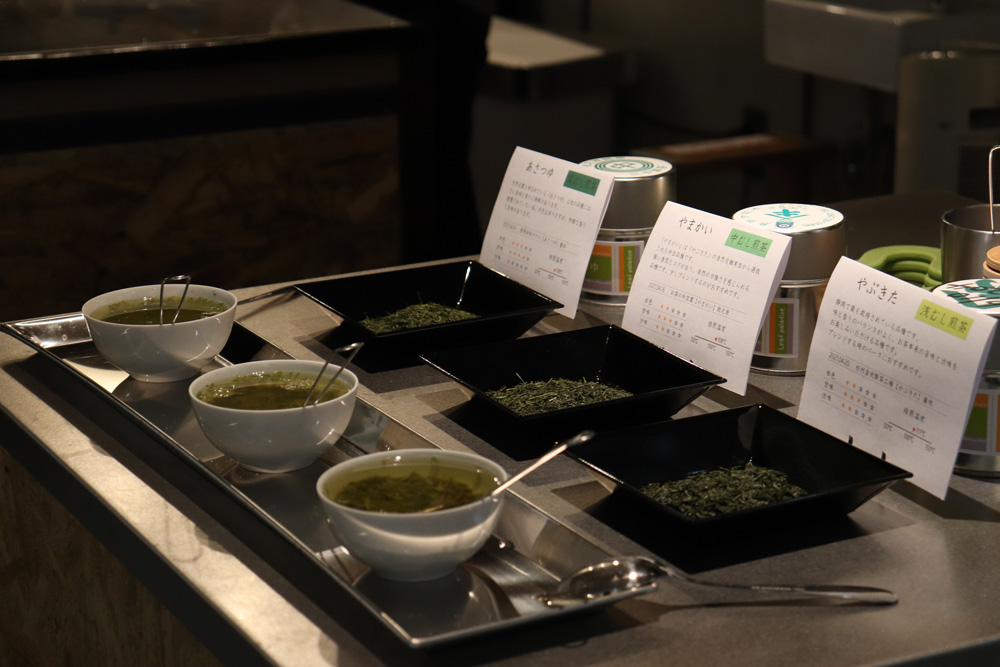
There is tea that expresses the character of a single farm, and there is tea created by a wholesaler through the careful selection and blending of multiple teas.
Each offers a different way to appreciate Japanese tea. Single-origin tea and blended tea are not simply better or worse than one another. Tea farmers have work that only they can do, just as tea wholesalers have skills and responsibilities that are particular to their profession.
Nor has the traditional role of the tea wholesaler become obsolete. If anything, as products and methods of selling tea become more diverse, the fundamental skills remain just as important: assessing tea leaves accurately, applying the right degree of drying to suit each tea, and blending teas to achieve a particular flavour profile.
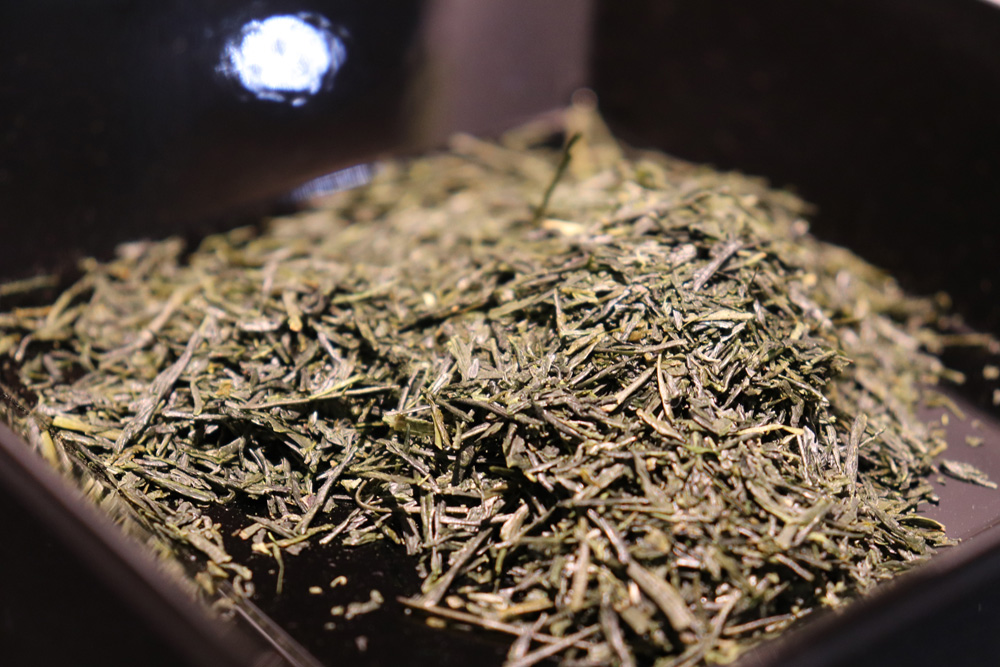
Should the tea be refined with sweetness at its core? Should the individual qualities of different teas be assessed and their aromas and flavours restructured through blending? Or should roasting be used to create a hojicha in which the roasted aroma plays the leading role? Each of these decisions reflects the judgement of the tea wholesaler.
Behind newer tea brands and cafés, too, often lies expertise built up through years of sourcing, refining and appraising tea. When choosing Japanese tea, therefore, considering which tea wholesaler refined it can offer another useful way of understanding why one tea tastes different from another.
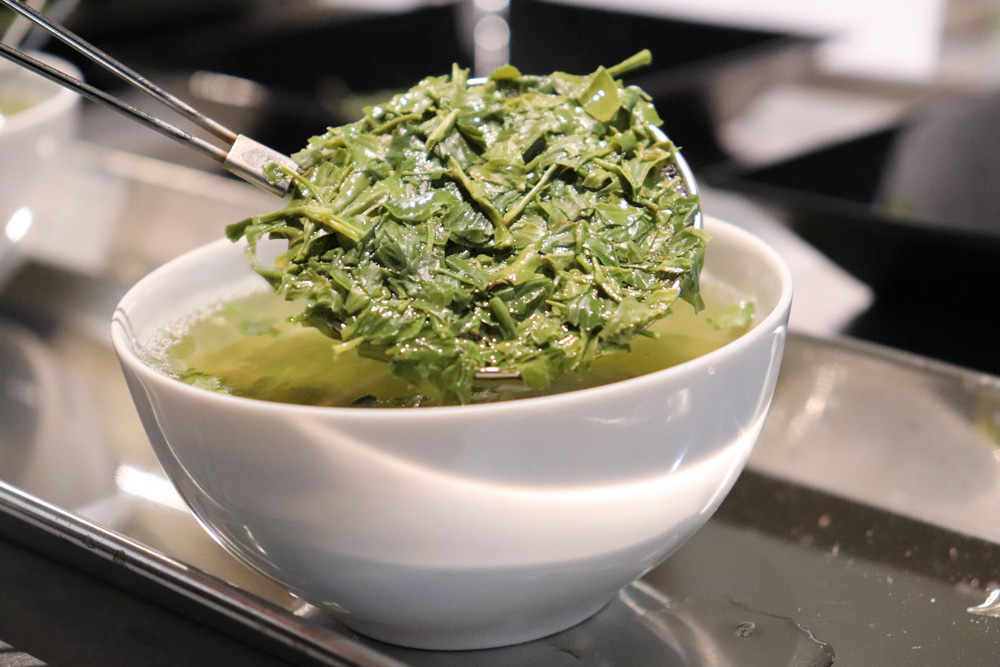
From here, we look at examples of businesses that make use of these differences in flavour to communicate the appeal of Japanese tea to consumers.
[Editor’s Note] : OCHATIMES visits tea wholesalers across Shizuoka Prefecture to report first-hand on their work, including tea sourcing, drying, blending and product development. You can explore our previous features in our collection of interviews with Japanese tea wholesalers.
How Can Japanese Tea Reach a Younger Generation? Marutamaen’s ‘SANOWA’ Offers a New Way to Discover Tea
Marutamaen, a long-established tea wholesaler in Yaizu, Shizuoka Prefecture, refines aracha at its own factory before selling the refined tea through its own shops. In 2018, the company launched a new brand, SANOWA (茶の輪). Behind the initiative was a growing concern that, for younger generations, the custom of brewing tea in a kyusu teapot was becoming less a part of everyday life.
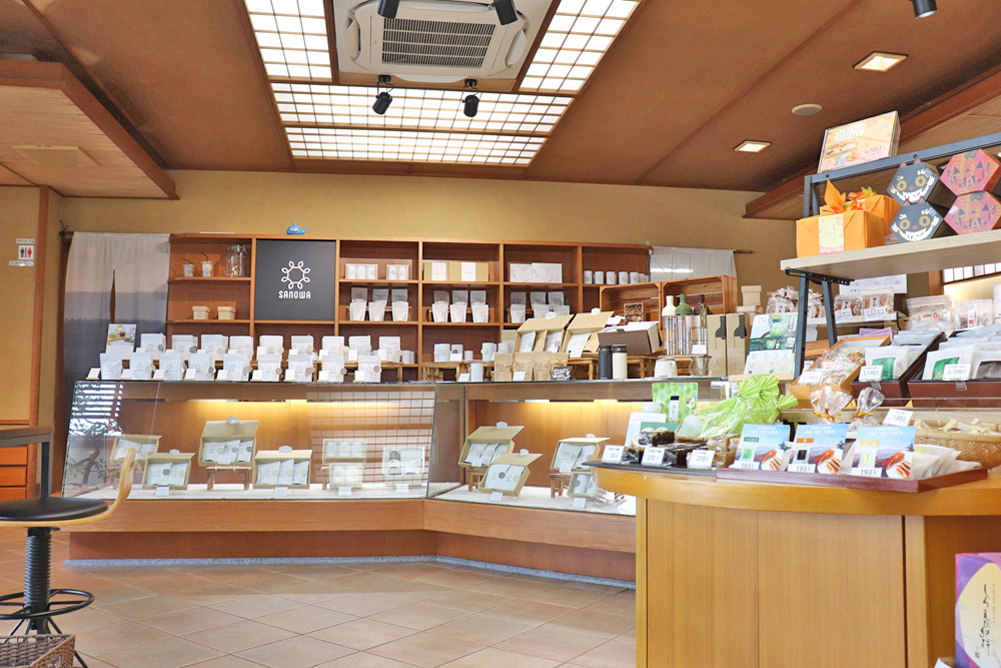
Rather than simply concluding that ‘young people no longer drink tea’, Marutamaen focused on the fact that bottled tea and drinks such as matcha lattes remain popular among younger consumers. Perhaps the issue was not Japanese tea itself, but that traditional ways of enjoying it no longer fitted as naturally into modern lifestyles.
With this in mind, SANOWA offers Japanese tea in forms that are easier to incorporate into daily life, including teabags, flavoured teas, confectionery and café drinks.
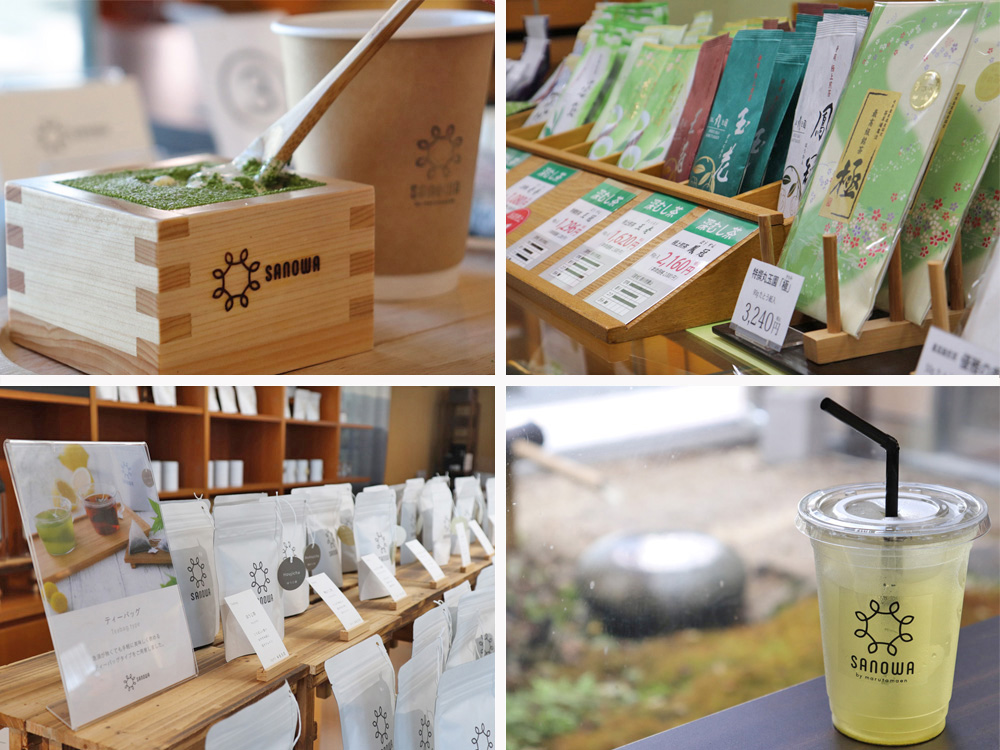
The shops also include café spaces, giving younger customers an accessible opportunity to start simply by trying the tea. It is one example of how the role of a tea wholesaler can extend beyond refining and distributing tea leaves to considering how consumers first encounter and engage with Japanese tea.
Beyond Refining and Wholesale | The Role of the Tea Wholesaler at Marumo Mori Shoten and chagama
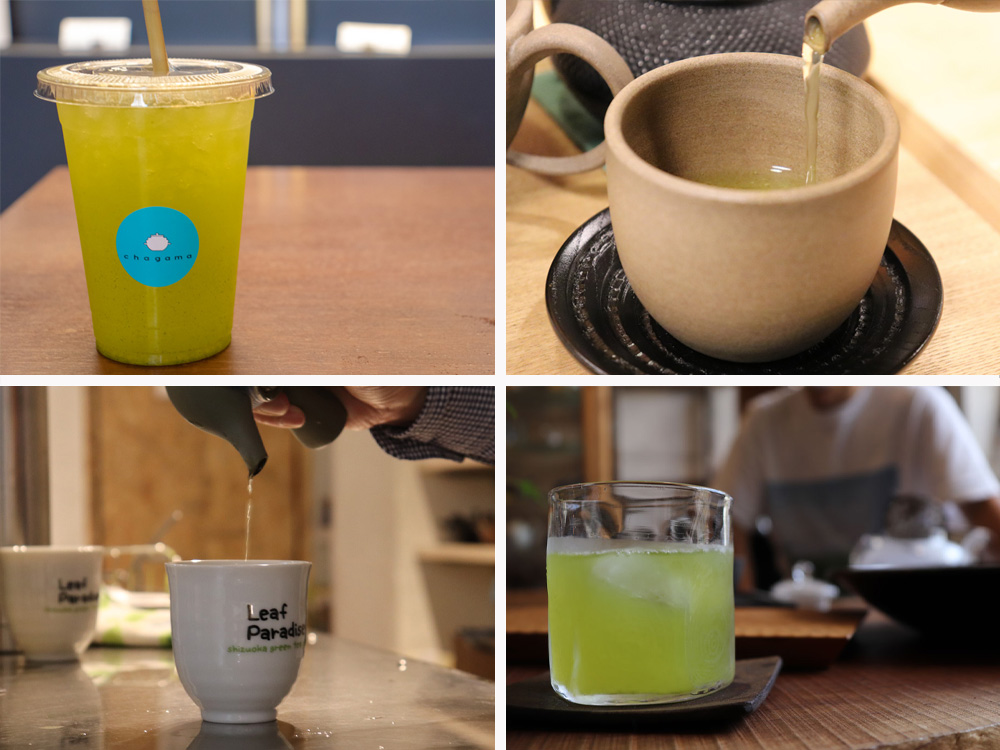
chagama, a Japanese tea shop in Shizuoka City, is operated by Marumo Mori Shoten, a long-established tea wholesaler. More than 50 varieties of tea line its shelves, while tastings and café offerings give customers the opportunity to try and compare different teas for themselves.
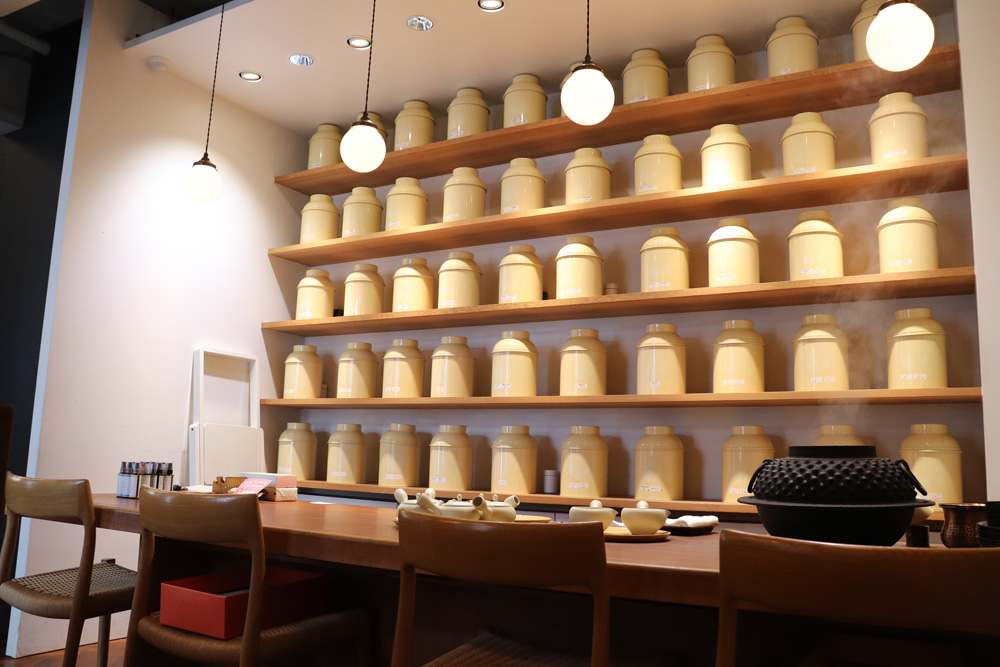
Marumo Mori Shoten carries on the traditional skills of the tea wholesaler: assessing teas from different sources and using blending techniques to create a balanced flavour. At the same time, it also operates its own space where customers can experience the finished teas in an accessible way.
The work of a tea wholesaler does not end with buying tea leaves, refining them and supplying them to retailers.
It is also about giving people the chance to taste tea.
Helping them choose.
Introducing them to teas they have not encountered before.
chagama offers one example of how the role of the Japanese tea wholesaler has expanded beyond its traditional functions.
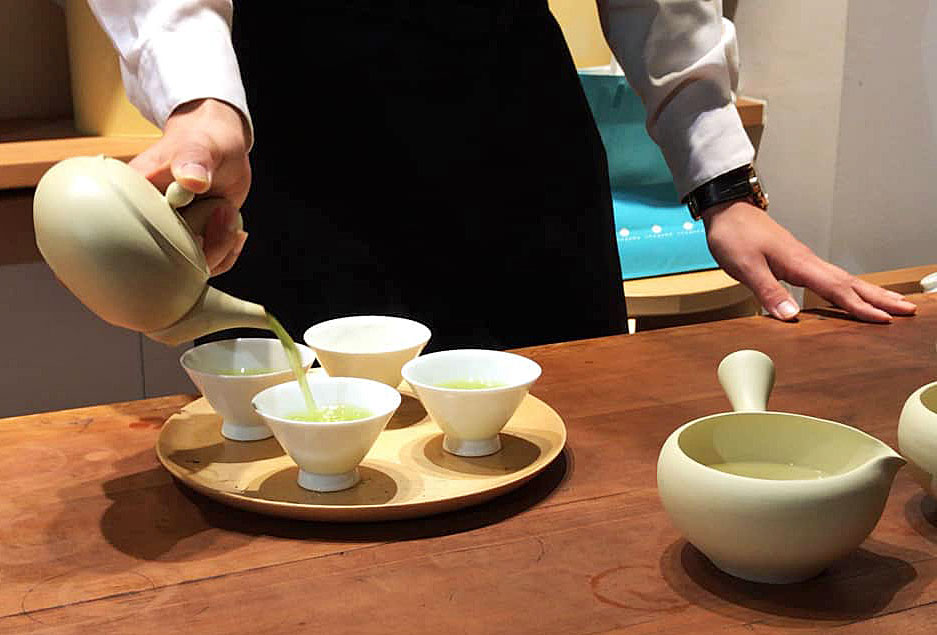
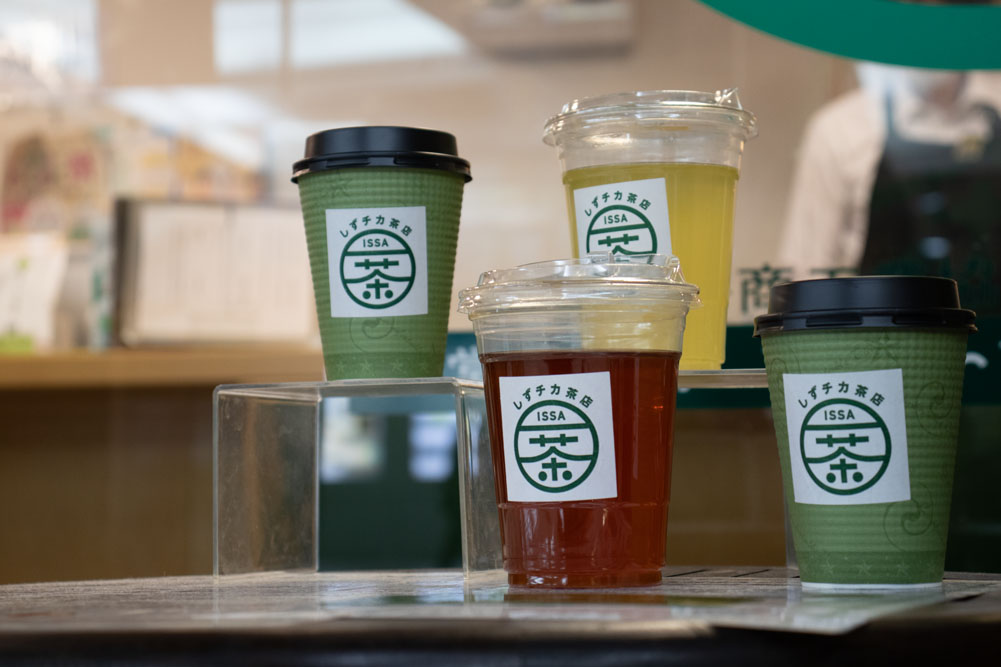
Connecting Around 50 Tea Merchants with Consumers | Shizuchika Tea Shop Issa
Efforts by tea wholesalers to build closer connections with consumers are not limited to individual shops or brands. Shizuchika Tea Shop Issa, a Japanese tea shop located in the underground plaza by the north exit of JR Shizuoka Station, is operated by the Shizuoka Tea Commerce and Industry Cooperative Association.
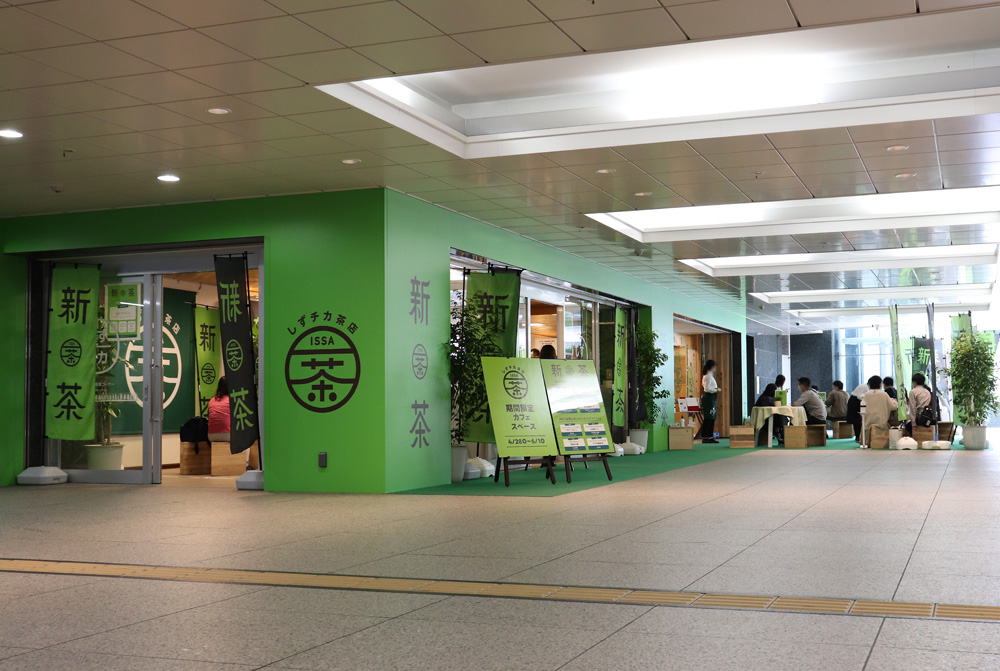
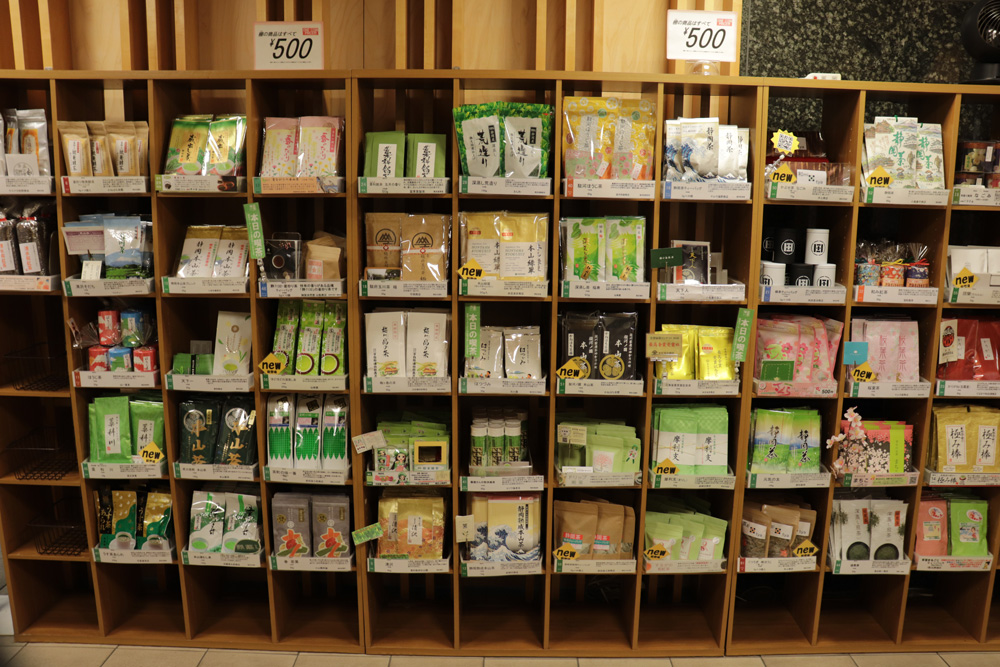
The shop brings together teas refined by around 50 tea businesses across Shizuoka City, allowing visitors to choose from teas produced by different merchants in one place. Each is sold at a special fixed price of ¥500.
The selection changes with the seasons, with teas such as shincha, cold-brew tea and aged tea appearing at different times of year. It offers an accessible way to discover teas from a wide range of tea merchants across Shizuoka City.
Issa is about more than simply selling tea leaves. The shop also offers a tasting menu that allows customers to compare several different teas. Staff with specialist knowledge adjust the brewing method to suit each tea, and customers who find one they particularly enjoy can purchase it directly from the retail section.
Rather than a single tea wholesaler selling only its own products, Issa brings together teas from merchants across the region in one place, connecting each tea with consumers. It is one example of an industry-wide effort to share with consumers the refining and product-development expertise that Shizuoka’s tea wholesalers have built up over many years.
The Other Maker Behind a Cup of Tea
When we think about a cup of Japanese tea, our attention naturally tends to turn to the tea fields and the farmers who tend them. Tea farmers, of course, are where Japanese tea begins: they cultivate the leaves from which the tea is made. Yet there is still much work to be done before the aracha they produce — tea that has undergone primary processing but has not yet been refined — becomes the tea we recognise as a finished product.
Which teas should be sourced?
How much heat should be applied during drying?
How should the tea be sorted, and which qualities should be brought forward?
Which teas should be blended, and what kind of flavour should the refined product have?
Even when sencha is made from tea leaves grown in the same region, it will not necessarily taste the same from one wholesaler to another. The judgement of each tea wholesaler shapes the final result.
A Japanese tea wholesaler is therefore far more than an intermediary moving tea through the supply chain. Its role is to assess the characteristics of the tea received from farmers, apply the necessary refining techniques, and turn it into a product ready for consumers.
Today, some tea wholesalers also operate their own shops, brands and cafés, creating direct points of contact with the people who drink their tea.
To understand the tea-producing region.
To understand the tea farmer.
And then to understand the tea wholesaler who refined the tea.
Looking at Japanese tea from all three perspectives reveals just how many layers of skill and judgement lie behind a single cup. Perhaps it is this accumulation of decisions that best defines the role of the modern Japanese tea wholesaler.
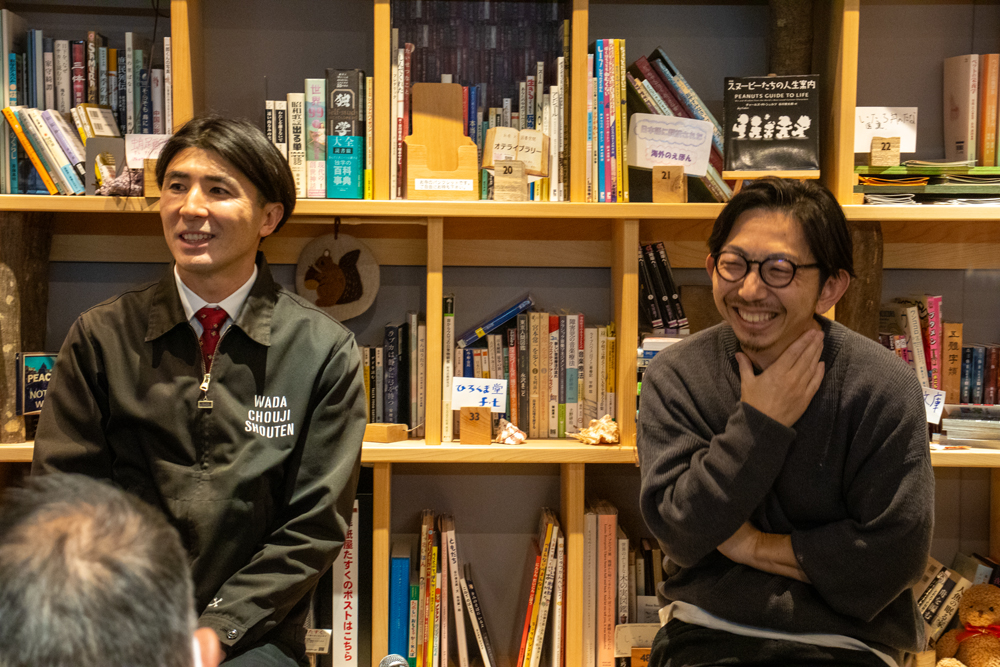 ▲ Left: Natsuki Wada (Wada Choji Shoten). Right: Keisuke Atsumi (Chaya Suzuwa).
| Writer | Norikazu Iwamoto |
| Profile | Editor-in-Chief of OCHATIMES. Served as a judge for the Shizuoka 100 Teas Award from 2021 to 2025 and met with the Vice-Governor of Shizuoka Prefecture. OCHATIMES has been featured on or linked from the websites of the World O-CHA Festival, the University of Shizuoka Tea Science Center, the City of Green Tea Shizuoka, and Japan’s Ministry of Agriculture, Forestry and Fisheries. |
Related articles
-
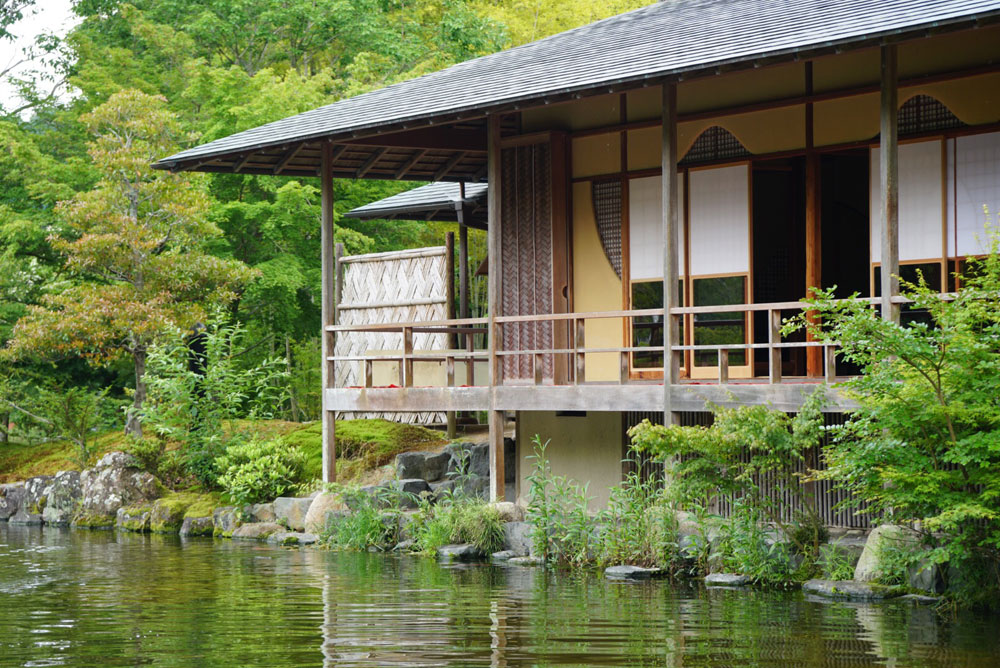
Gyokuro and Matcha Tasting in a Japanese garden in Gyokuro no sato (Asahina Gyokuro, Matcha)
Located about 10 minutes by car from the Fujieda-Okabe IC of...
OCHATIMES編集部
-
Osadaen : Trailblazing ‘Mori-no-Cha’s’ Route to the Global Market【Morimachi, Shizuoka Prefecture】
Morimachi in western Shizuoka Prefecture, surrounded by smal...
OCHATIMES編集部


 on the red bar to close the slide.
 to see the
distance between the current location to the Chaya.
to see the
distance between the current location to the Chaya.