

Trace the Roots of Shizuoka Tea at ChanoMe. A Moment of Tranquility with a Tea connected to Shoichi-Kokushi (Honyama Tea)
 Go to Japanese page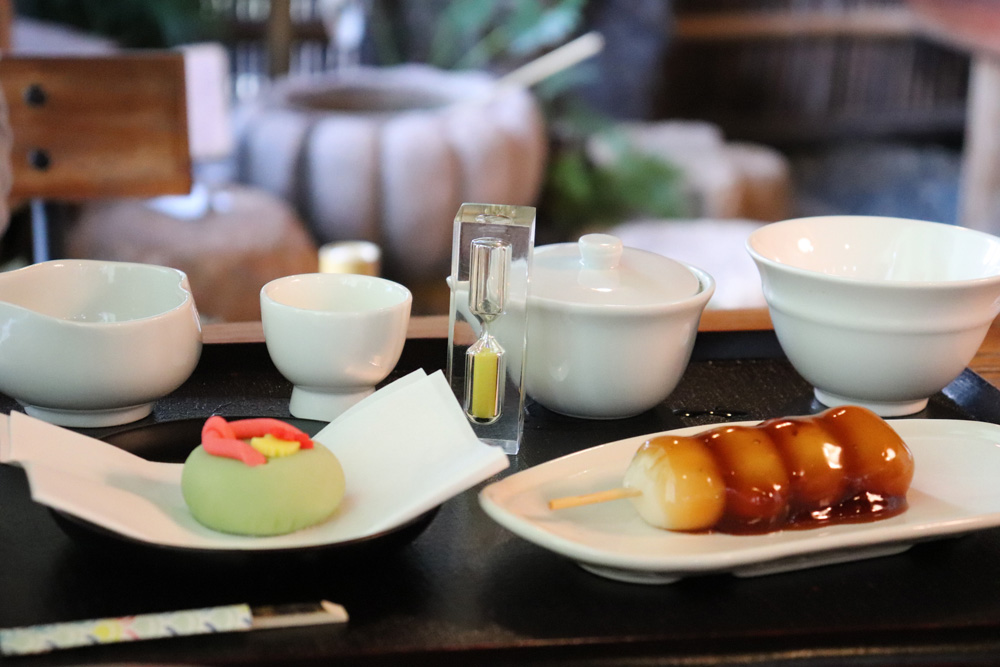
Tracing the roots of Shizuoka tea, whose history stretches back to the Kamakura period, leads us to ‘Cha no Me’ a Japanese tea café located in Ōhara, Aoi Ward, Shizuoka City. Operated by Morita Seicha—a long-established tea wholesaler with over 70 years of history—this café offers guests the rare experience of brewing tea themselves using a legendary variety said to be connected to the founder of Shizuoka tea, the Zen monk Shōichi Kokushi. Through this hands-on encounter, visitors can discover the true depth and refinement of authentic Shizuoka tea.
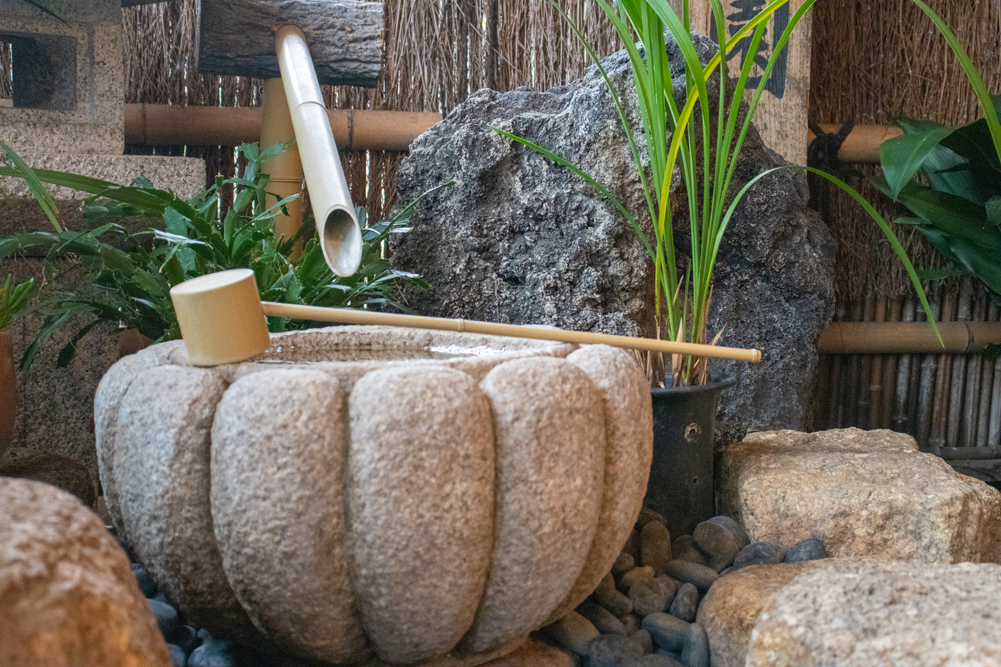
The café, set in a building reminiscent of a traditional Japanese farmhouse, is also known for the soothing sound of its suikinkutsu (a buried water harp), creating a tranquil atmosphere that attracts many visitors seeking a moment of calm.
In this article, we speak with Junpei Morita, the Managing Director of Morita Seicha, to explore the company’s dedication to tea-making and its heartfelt mission to share the beauty of Japanese tea with the world.
Contents
- 1 ‘Cha no Me’: A Japanese Tea Café Preserving the Legacy of Shoichi Kokushi and Passing It On to the Future
- 2 Introducing the Café Menu at Cha no Me
- 3 Interview: The luxury of brewing the elusive tea leaf ‘Legendary Aya’ by hand — discovering the origins of Shizuoka tea at Morita Seicha’s Cha no Me
- 3.1 At ‘Cha no Me’, discover your own blissful cup of tea: an interactive Japanese tea café where you can learn the art of brewing.
- 3.2 The Legendary Tea of Shizuoka: Savouring History through the Rare Leaves of ‘The Colours of Legend’
- 3.3 A Fine Tea Born in the Birthplace of Shizuoka Tea
- 3.4 A moment of peace wrapped in the gentle aroma of tea brewed in a Kyusu
- 4 Information Of Chanome
‘Cha no Me’: A Japanese Tea Café Preserving the Legacy of Shoichi Kokushi and Passing It On to the Future
Opened in the spring of 2016 in the serene, nature-rich district of Ōhara in Aoi Ward, Shizuoka City, Cha no Me is a café where visitors can savour the charm of Japanese tea at a leisurely pace. It is run by Morita Seicha, a long-established tea company with over 70 years of history.
In an age where pet bottled tea has become the norm, Morita Seicha founded Cha no Me out of a desire to share ‘the true delight of tea brewed in a kyusu teapot.’ The café offers a hands-on experience designed to help guests rediscover the depth and richness of Japanese tea culture.
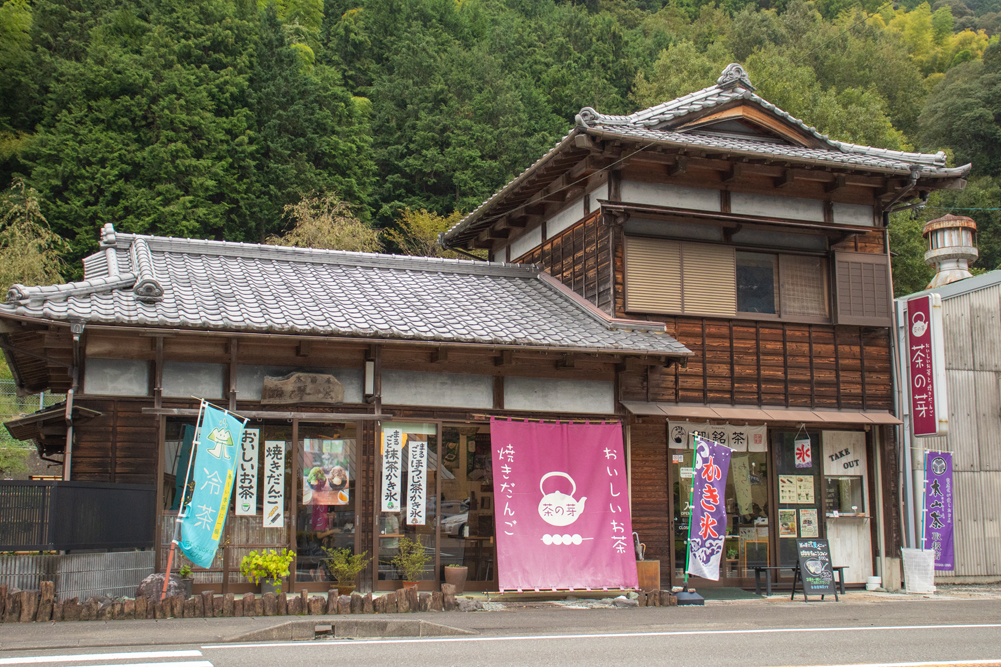 ▲Nestled harmoniously within the tranquil landscape of Ōhara, surrounded by the mountains and the Warashina River, Cha no Me blends beautifully with its natural surroundings.
Inside, guests will find a tea room and a suikinkutsu, creating an atmosphere of quiet elegance and refined simplicity. Visitors are invited to brew their own tea using a kyusu, enjoying carefully selected teas and traditional sweets while soaking in a moment of peace and calm.
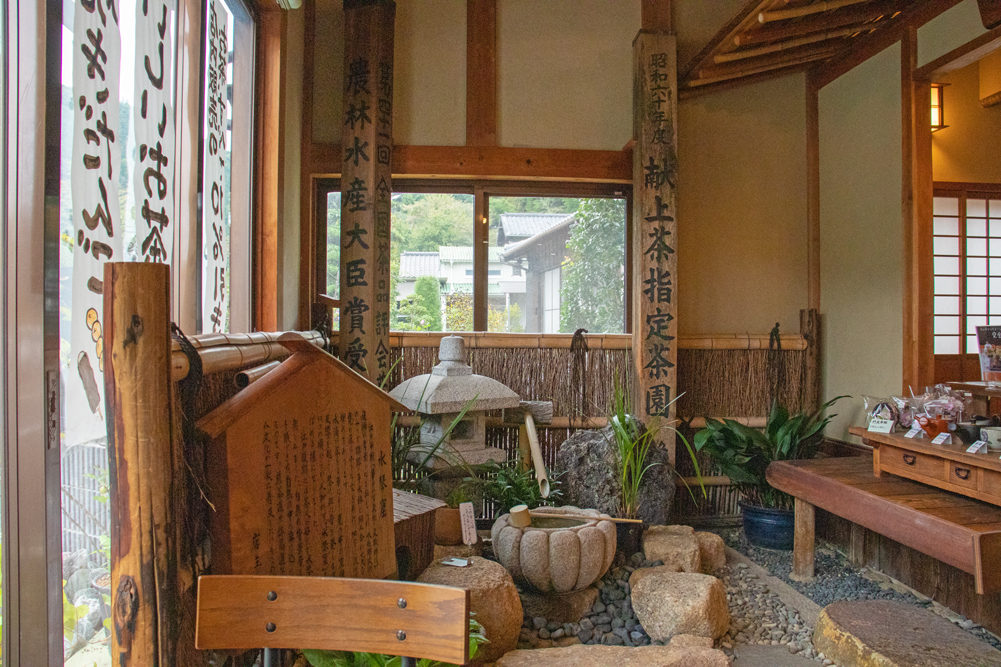
※Suikinkutsu is a traditional Japanese garden feature that produces a delicate, resonant sound. A pot about 60 centimetres wide is buried upside down roughly 1.5 metres underground, and water from a nearby basin drips into it. The sound reverberates within the pot, creating echoes reminiscent of the tones of a koto (Japanese zither)—a gentle harmony that soothes both ear and spirit.
Introducing the Café Menu at Cha no Me
Operated by Morita Seicha, Cha no Me offers carefully crafted teas made with traditional techniques, featuring ‘Honyama tea’ nurtured in the serene Satoyama landscape of Ohara, along with other premium teas meticulously selected from tea-growing regions across Shizuoka Prefecture.
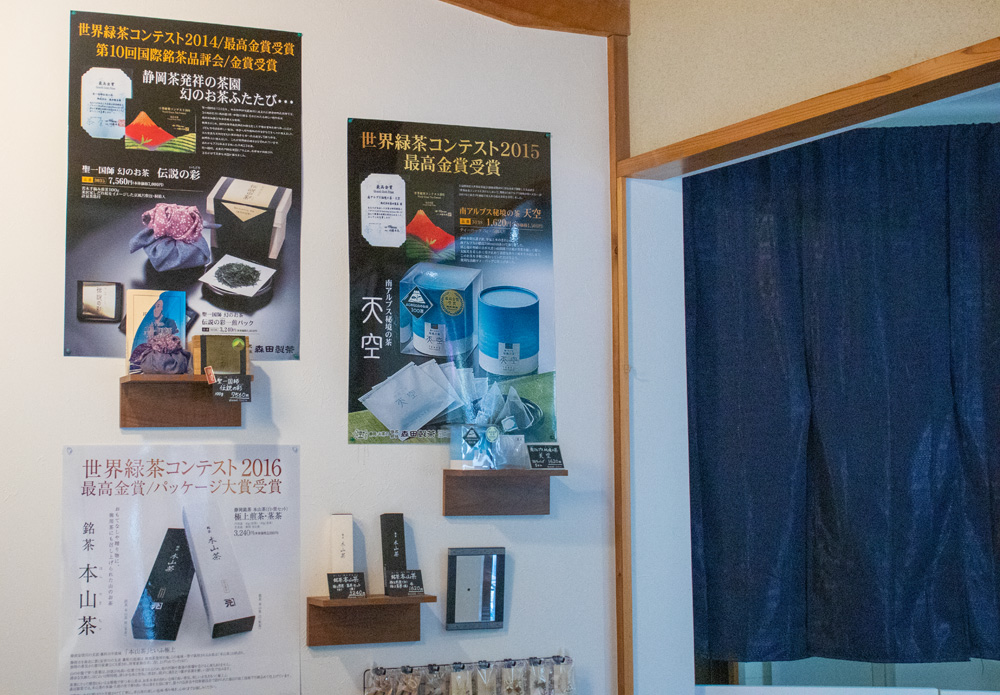
Morita Seicha’s refined craftsmanship and unwavering dedication to quality have earned high praise at numerous competitions and technical showcases.
Here, we present a selection of delightful café menu items made using Morita Seicha’s exquisite teas.
Fuku no Ka
The premium sencha Fuku no Ka, one of the most sought-after teas at Cha no Me, is a seasonal delight harvested around the eighty-eighth day after the spring equinox. It is celebrated for its delicate sweetness and rich, rounded umami flavour.
This tea’s refined taste appeals to both seasoned tea enthusiasts and newcomers alike, making it a popular choice for gifts. According to Morita Seicha, orders for Fuku no Ka continue to pour in.
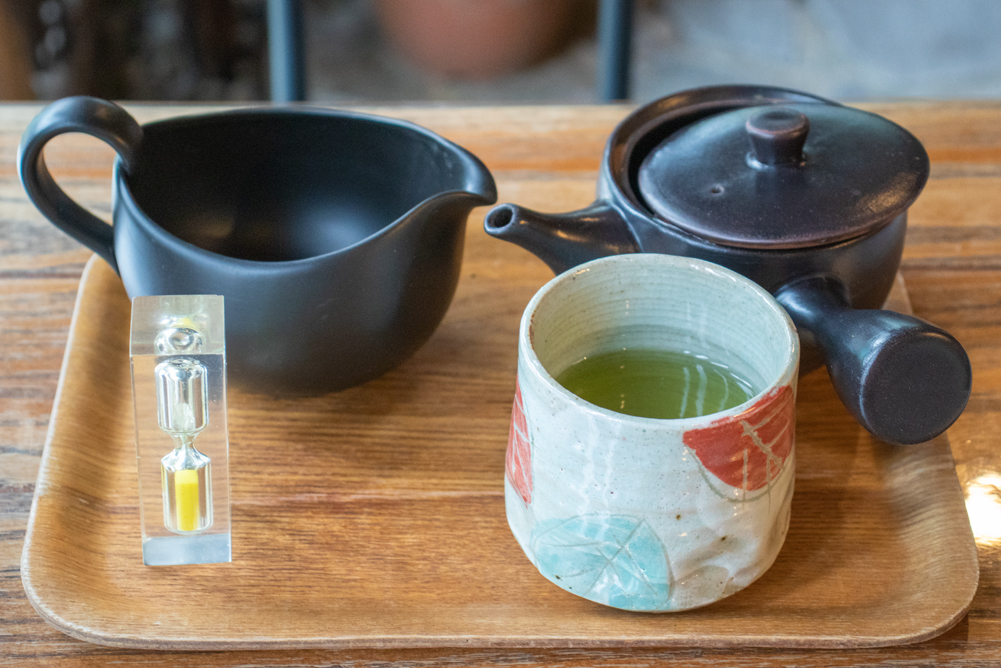
 ▲The staff carefully explain the ideal brewing method for each type of tea, allowing anyone to enjoy a delicious cup made with a traditional kyūsu teapot.
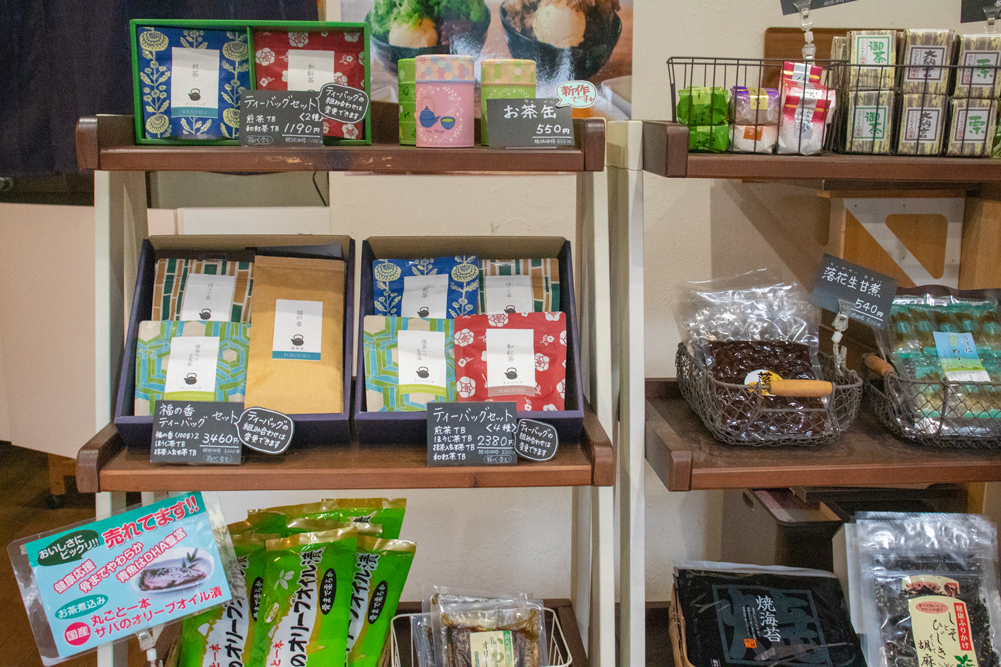
The teas featured on the café menu at Cha no Me are also available for purchase in the adjoining retail section. If you find a tea you love, why not take some home and savour the authentic flavour of Cha no Me in your own space?

Legendary Set – The Illusory Tea Linked to Shoichi Kokushi: Densetsu no Irodori
Densetsu no Irodori (The Colours of Legend) is a tea cultivated in the fields that stretch before the birthplace of Shoichi Kokushi, revered as the founder of Shizuoka tea.
Crowned with the Grand Gold Award at the 2014 World Green Tea Contest and a Gold Prize at the 10th International Fine Tea Competition, this tea has earned numerous honours. Yet its annual harvest yields less than 50 kilograms, making it an exceedingly rare and precious variety.
At Cha no Me, this elusive tea is offered as part of the indulgent café experience known as the Legendary Set.
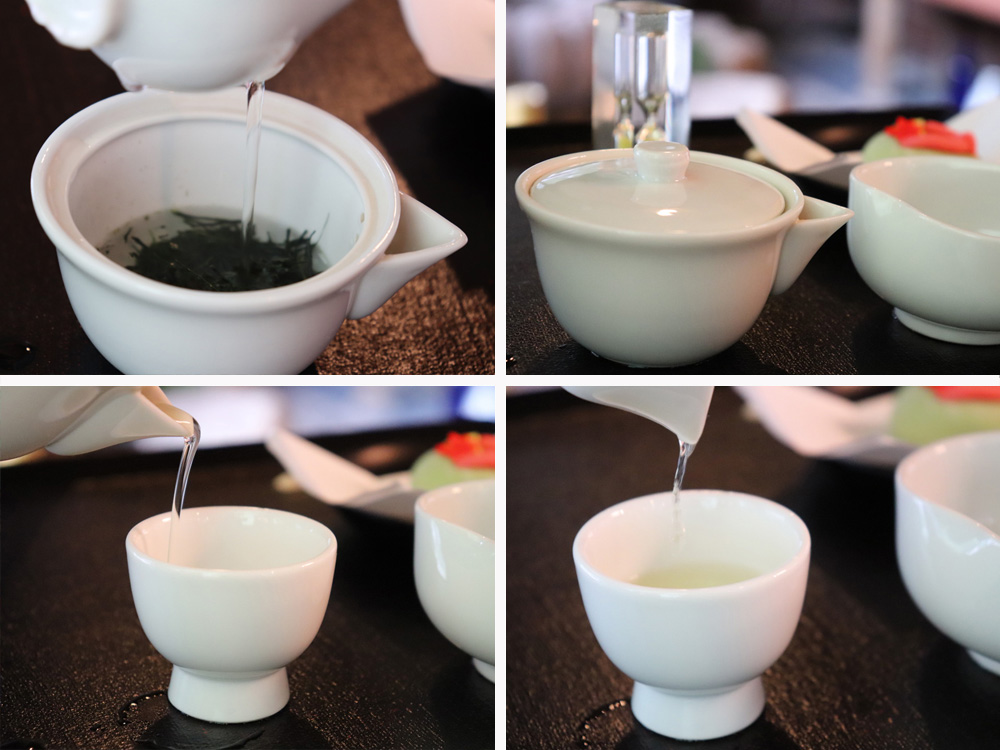
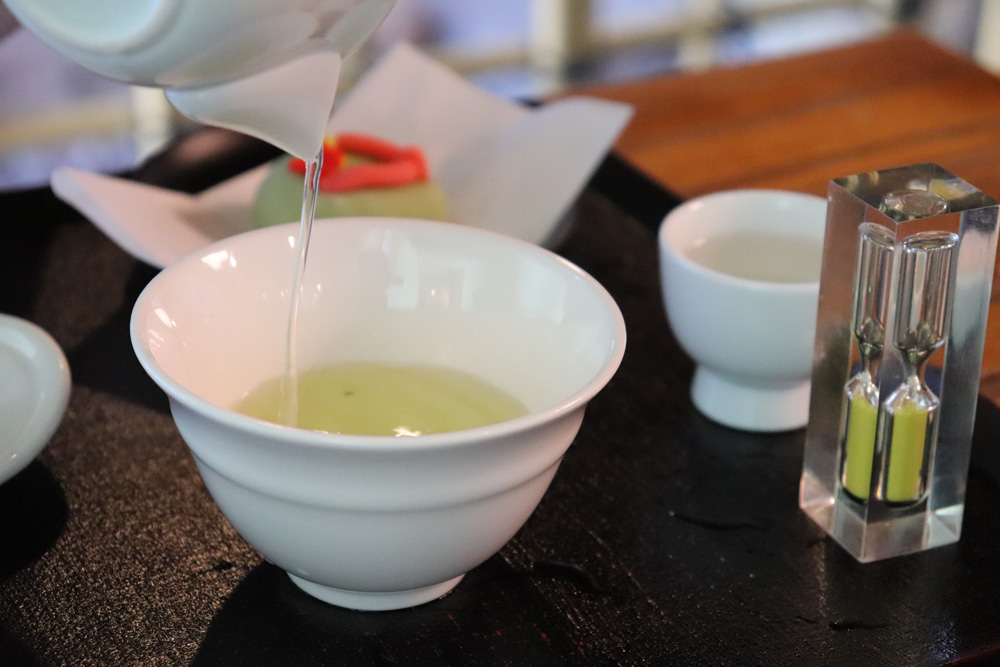
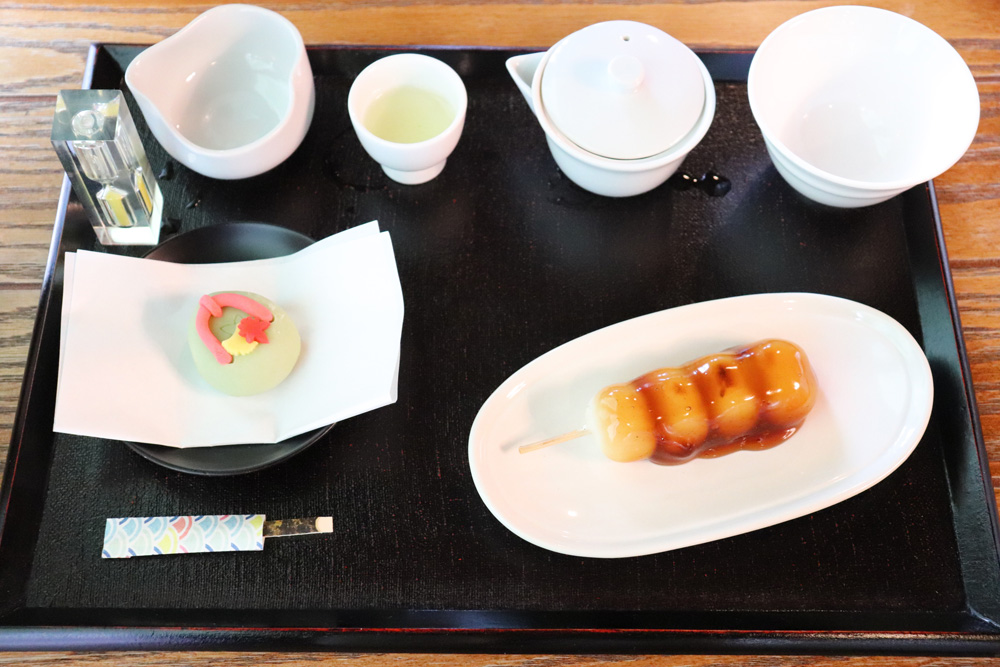
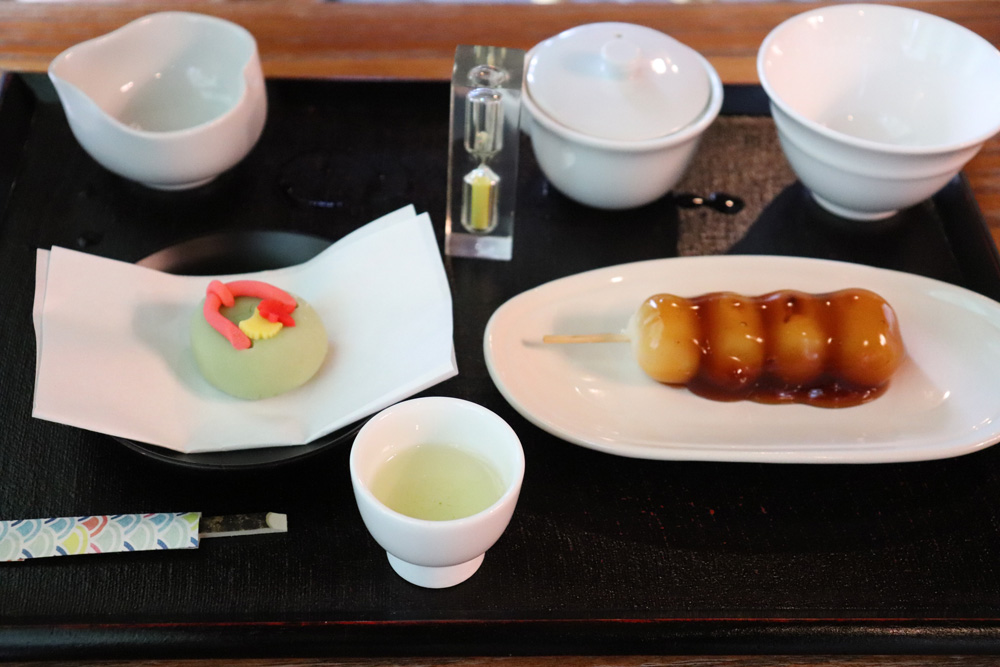 ▲The set includes Densetsu no Irodori, a seasonal nerikiri (Japanese sweet), and one dango skewer of your choice. This time, we selected the most popular option: mitarashi dango glazed with a luxuriously rich, syrupy sauce.
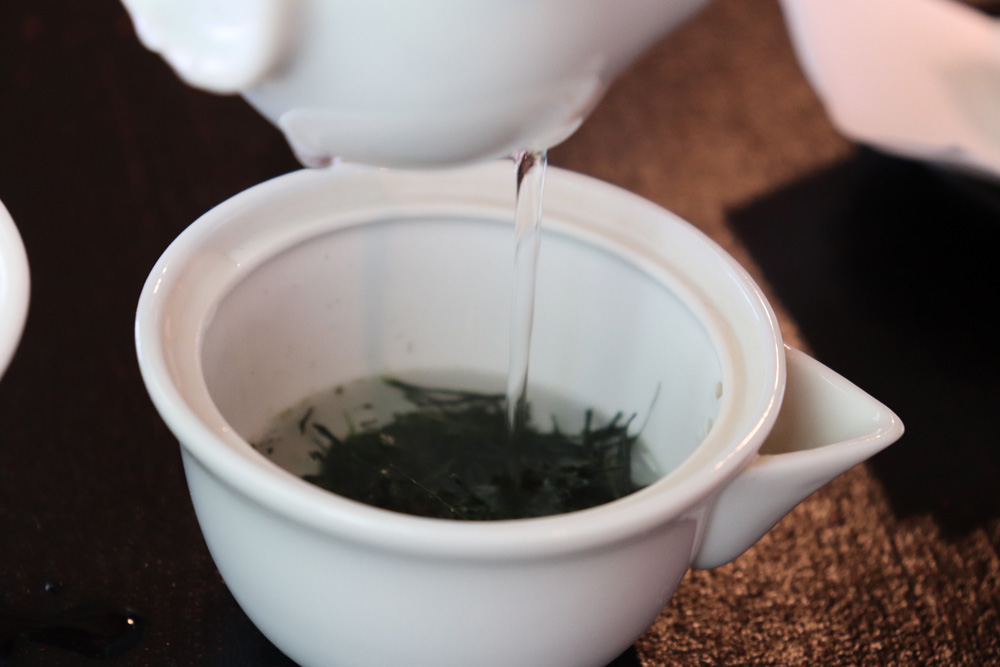
For the first brew, the tea is brewed with water cooled to around 50–60°C, allowing one to savour its mellow aroma, rich umami, and deep body.
(Cha no Me’s staff carefully guide guests through the ideal brewing process for each tea—covering leaf quantity, water temperature, and proper handling of the teapot.)
From the second brew onward, hot water from the pot can be poured directly into the teapot, offering a lighter, more refreshing flavour distinct from the first.
Through this progression of flavours, guests can take their time to appreciate how the taste of the tea evolves, enjoying it alongside the seasonal nerikiri and their choice of dango from the menu.
Matcha Chocolate Fondue (Seasonal Menu)
Indulge in a luxurious dessert where you dip sweet dumplings, seasonal fruits, matcha chiffon cake, and marshmallows into a warm, rich matcha chocolate sauce. The set also includes a teabag of domestically produced black tea.
The handcrafted matcha chocolate sauce is made using the Okumidori tea cultivar, grown at Morita Tea Farm’s own plantation.
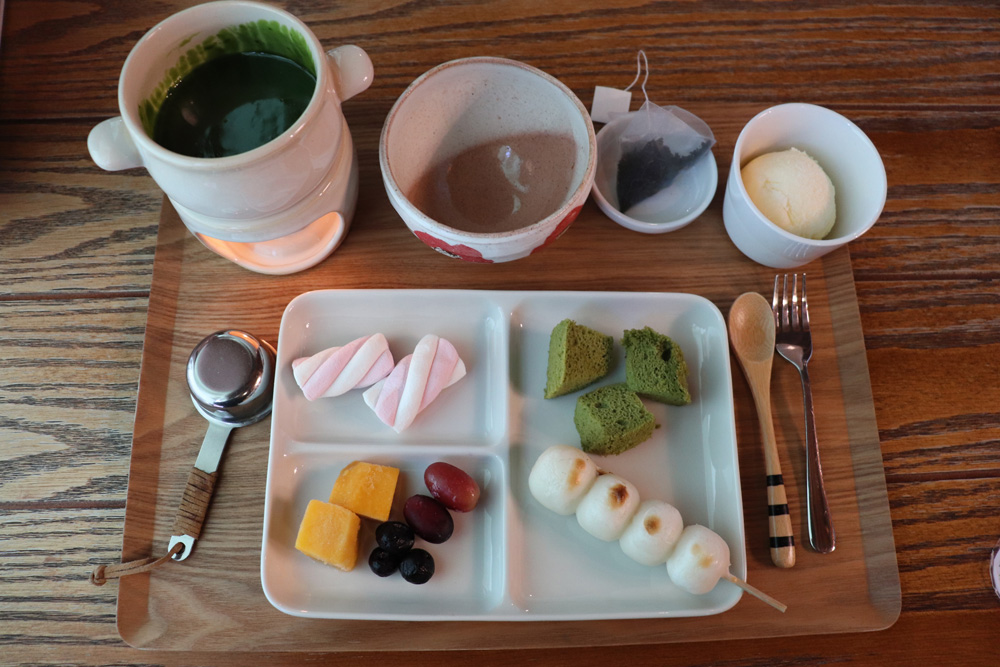
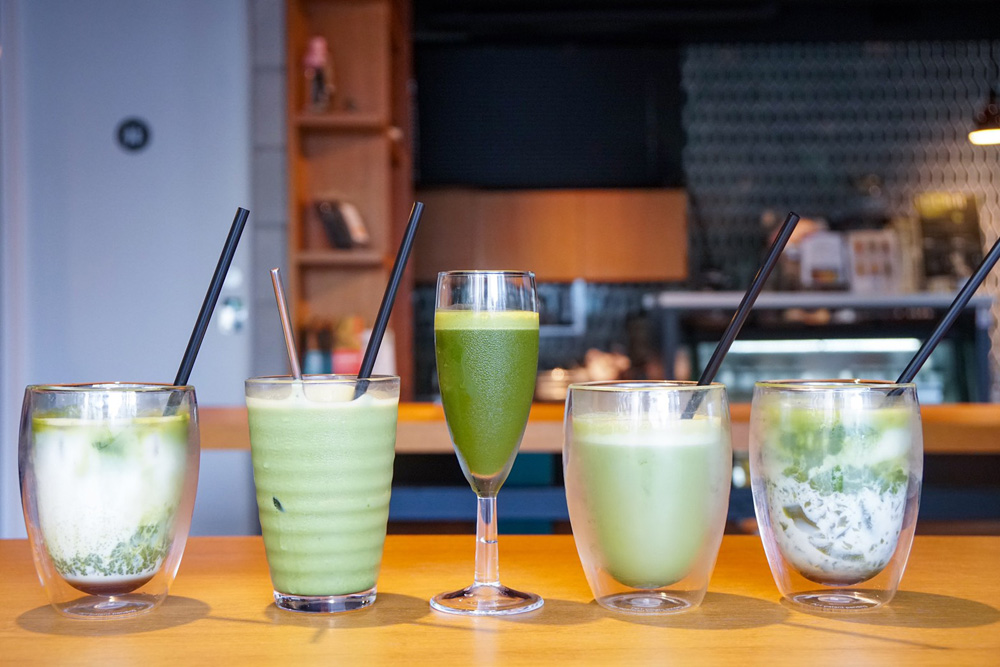
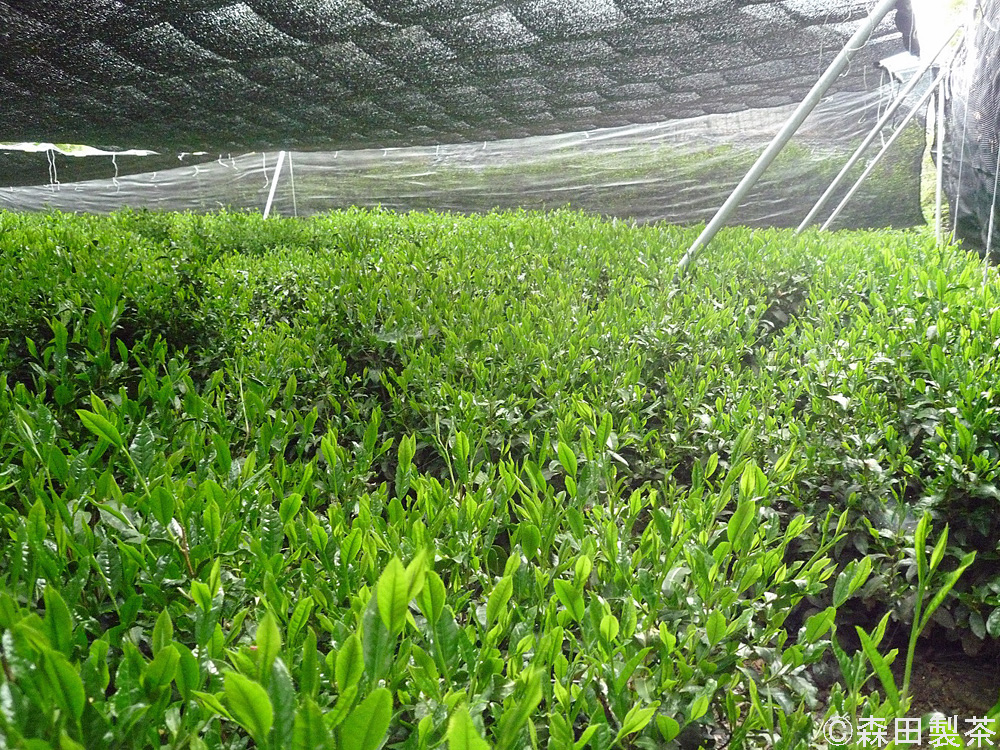 ▲Cha no Me also offers a wide selection of café items featuring matcha. All the matcha used in these menus is cultivated at Morita Tea Farm’s own tea fields.
This popular menu item perfectly balances the sweetness of chocolate with the deep, distinctive flavour of matcha. Not only is it delicious, but its elegant presentation and interactive style make it a delight to both the eyes and the palate.
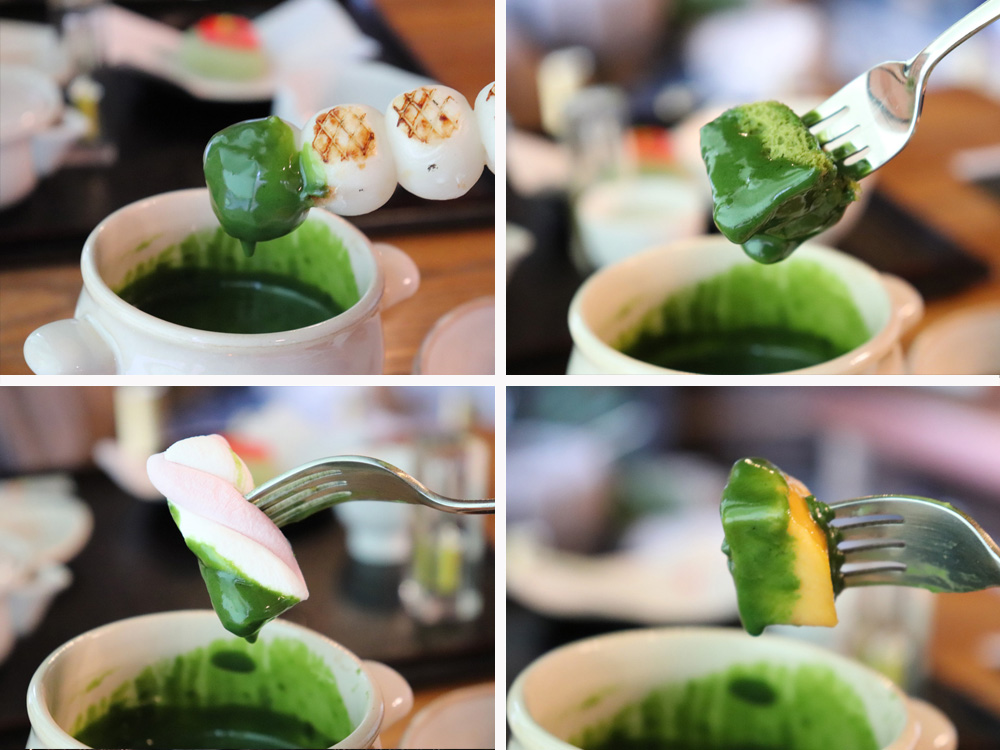
▲Cha no Me offers a variety of other cafe menus featuring matcha, all made with matcha cultivated in Morita Seicha’s own tea gardens.
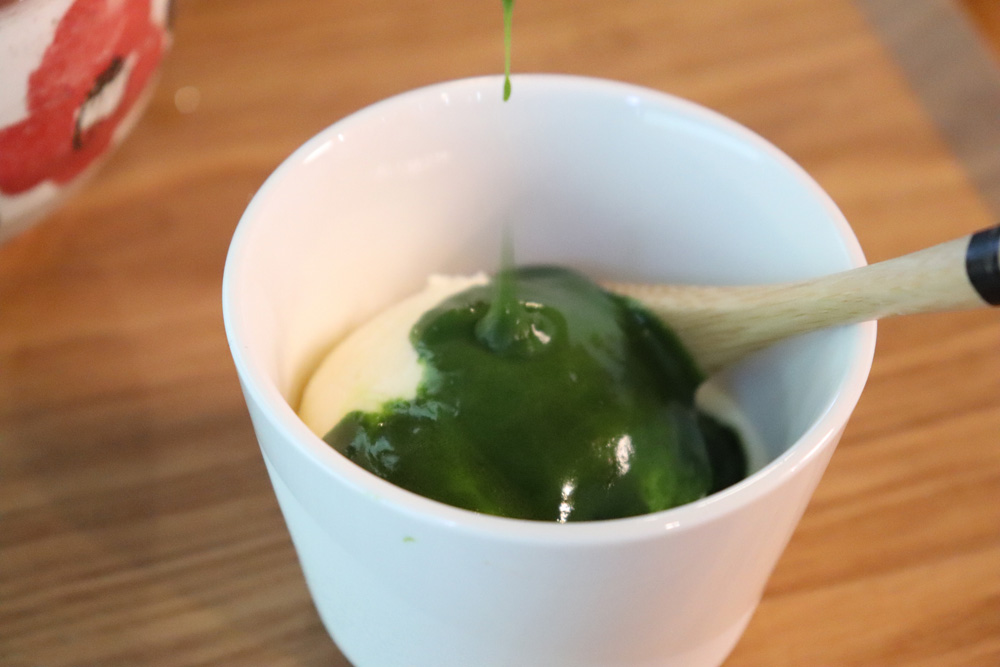
To finish, pour the remaining matcha chocolate over ice cream. The contrast between the warm, velvety chocolate and the cold, creamy ice cream creates an irresistible finale.
Marugoto Matcha Shaved Ice (Summer-Only Menu)
At Cha no Me, the main menu changes with the seasons. One of the highlights of summer is the Matcha Shaved Ice.
This special dessert is made by finely shaving a block of our original ice, known as Senri-hyo—ice that has been carefully infused with tea leaves and matcha powder.
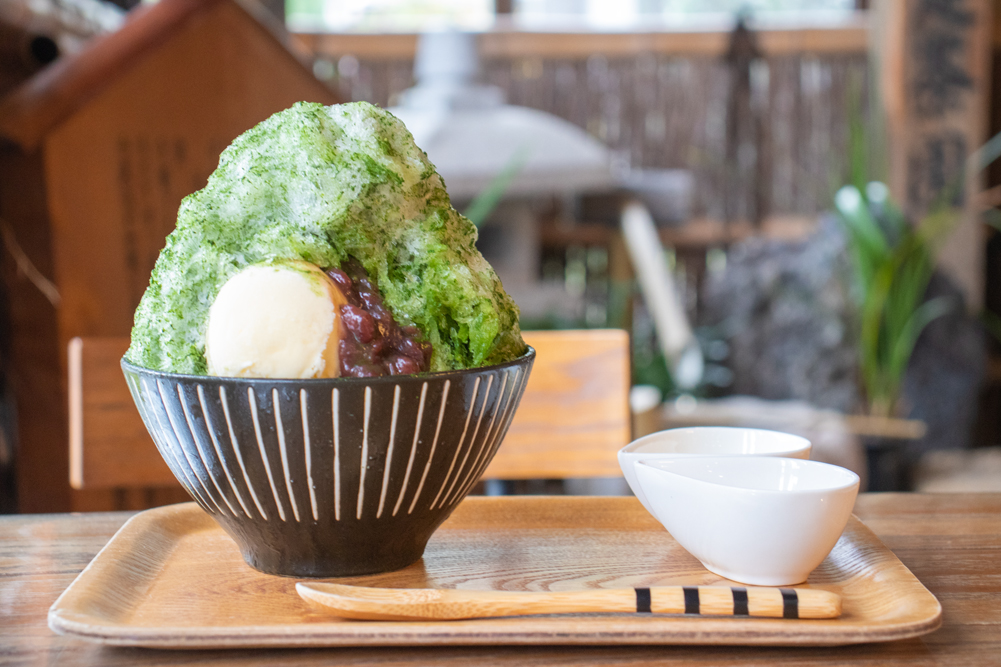
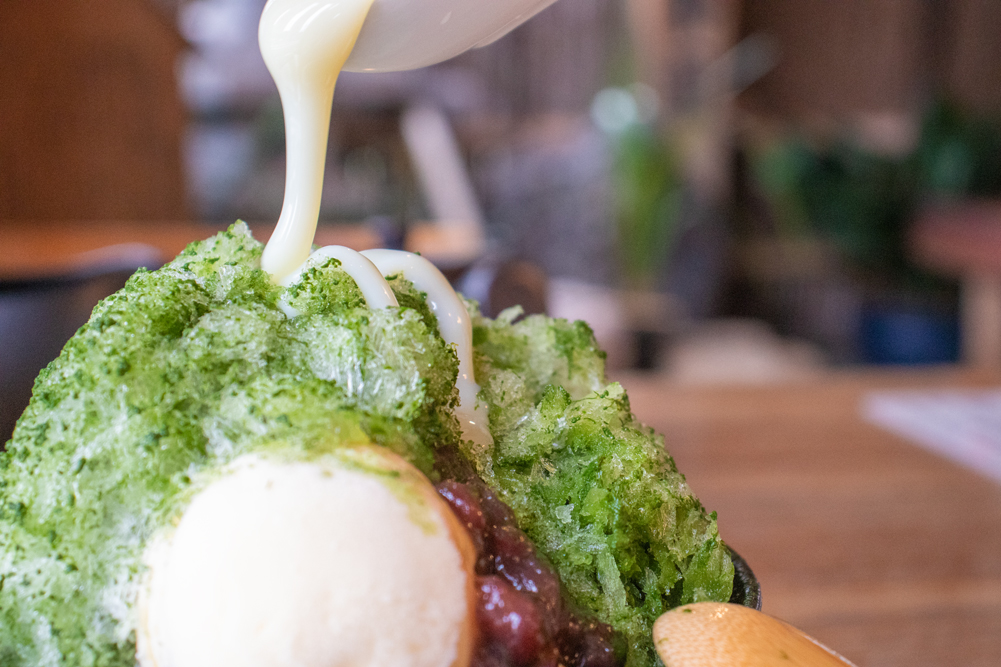
Each spoonful reveals the deep, authentic flavour of Japanese tea, perfectly captured in the ice itself. Served with ice cream, sweet red bean paste, and two kinds of syrup, this seasonal treat offers layers of taste and texture that change with every bite.
During the height of summer, it’s so popular that queues often form just for a taste of this refreshing matcha indulgence.
Baked Sweet Potato Parfait (Winter-only Special)
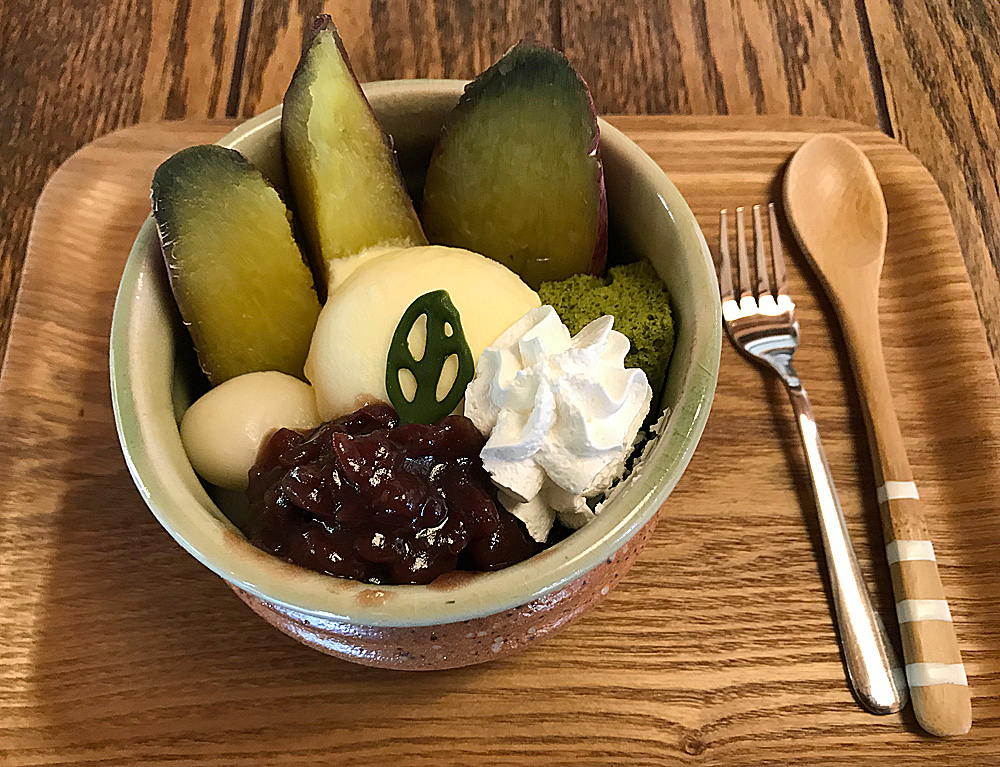
Perfect for the chilly winter months, our popular Special Baked Sweet Potato Parfait is made with a whole premium Beniharuka sweet potato, freshly delivered from dedicated farmers in Kumamoto, Kyushu.
The lower layers feature chewy grilled rice dumplings and fluffy homemade chiffon cake, topped with sweet red bean paste and whipped cream.
The warm, tender sweet potato—freshly roasted in-house—melds beautifully with the cool ice cream, creating a delightful harmony of textures and flavours in this indulgent Japanese-style parfait.
Some café menu items are also available for takeaway. Simply place your order at the dedicated takeaway window and collect your treat when it’s ready.
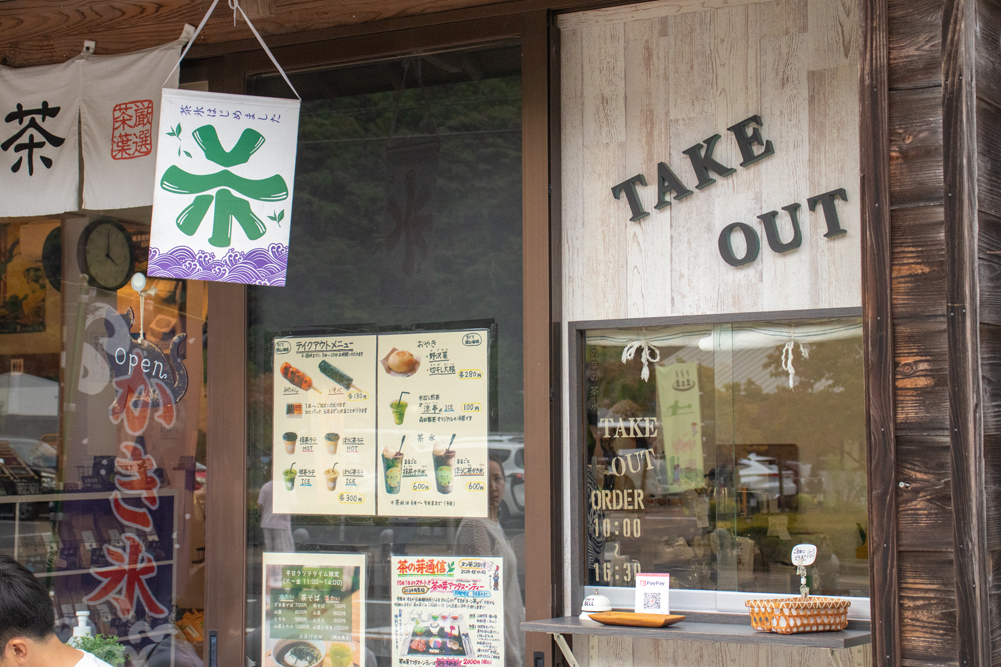 ▲After placing your order at the takeout counter, you can pick up your item.
Interview: The luxury of brewing the elusive tea leaf ‘Legendary Aya’ by hand — discovering the origins of Shizuoka tea at Morita Seicha’s Cha no Me
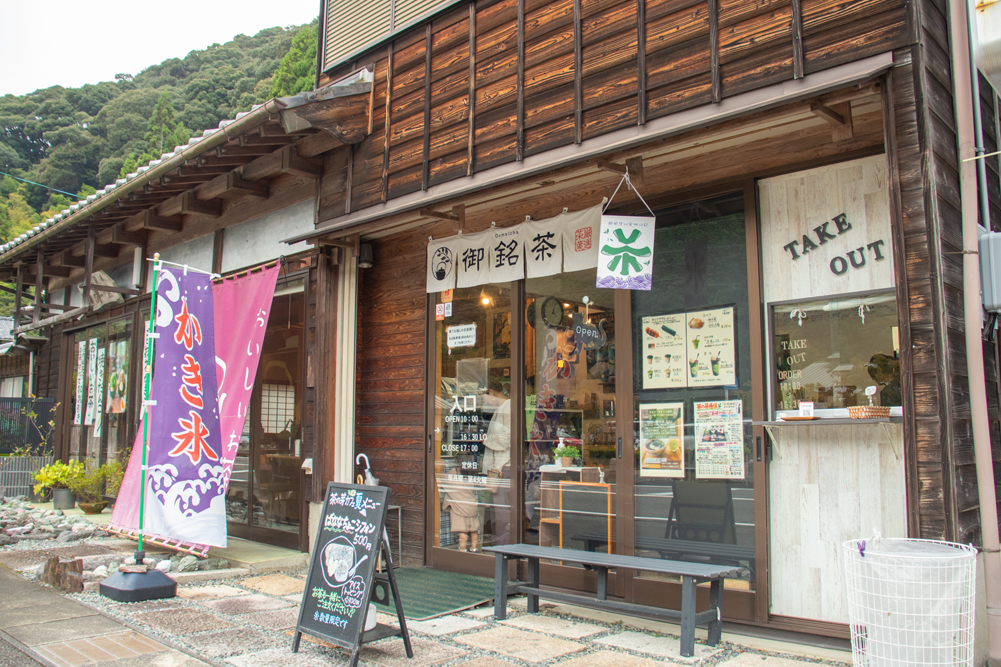
We interviewed Mr Junpei Morita, the President of Morita Seicha.
At ‘Cha no Me’, discover your own blissful cup of tea: an interactive Japanese tea café where you can learn the art of brewing.
— Could you tell us about the Japanese tea café ‘Cha no Me’?
‘Cha no Me’ opened in 2016 after renovating a building that once served as the retail shop of Morita Seicha.
The café’s concept is to share the true delight of Japanese tea — especially the unique charm of teas cultivated in the mountain regions of Shizuoka.
To express this philosophy, the café offers a hands-on experience where staff carefully explain how to brew each type of tea, and guests can enjoy preparing their own tea under gentle guidance.
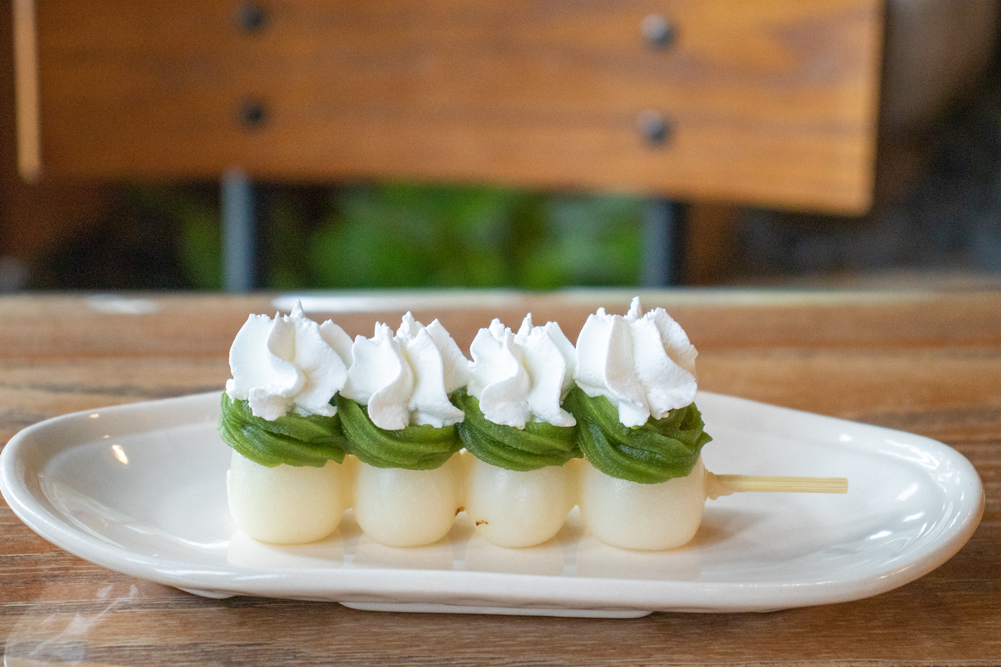
Alongside the teas, visitors can savour seasonal sweets that pair perfectly with them, such as grilled dango, nerikiri (delicate bean confections), and roasted green tea pudding.
The café also sells Morita Seicha teas at reasonable prices, allowing customers to take home the same teas they enjoyed from the menu.
The Legendary Tea of Shizuoka: Savouring History through the Rare Leaves of ‘The Colours of Legend’
— Among the many items on Cha no Me’s café menu, one that truly stands out is ‘Densetsu no Irodori’, or The Colours of Legend. Could you tell us more about this special tea?
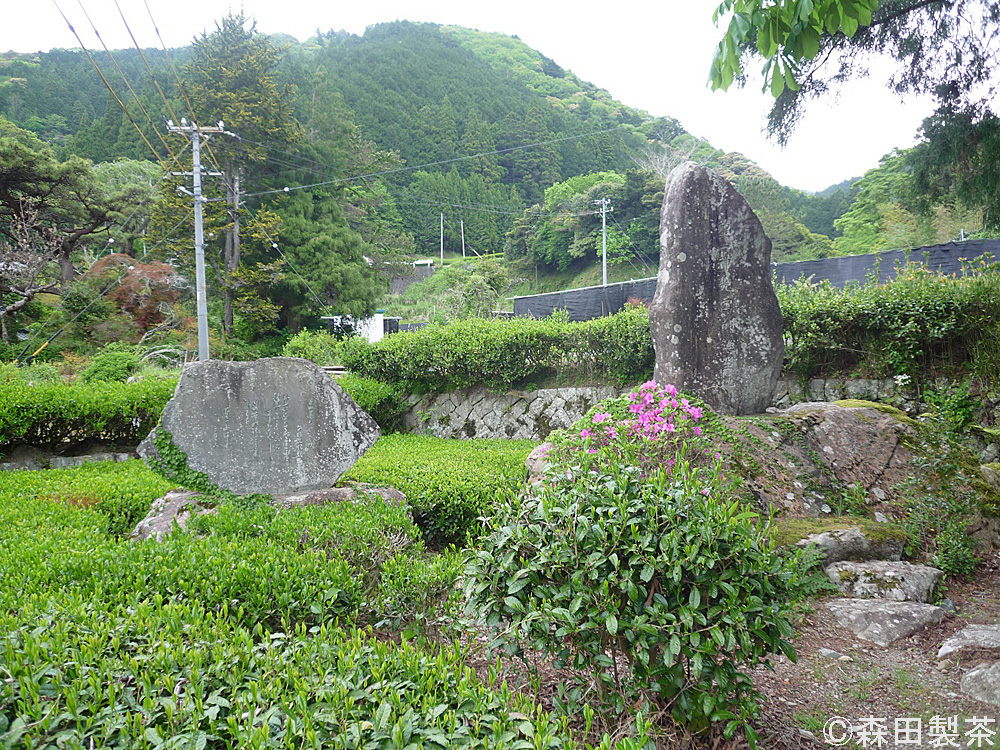
About thirty minutes by car from Cha no Me lies Tochizawa, a mountain village in Shizuoka City’s Aoi Ward (Ōkawa district). It is home to the birthplace and resting place of Shoichi Kokushi, revered as the founding figure of Shizuoka tea.
The tea fields stretching out before his former home had long been abandoned and overgrown, but after four years of dedicated effort, Morita Seicha succeeded in restoring them. The tea harvested there was named Shoichi Kokushi – The Colours of Legend.
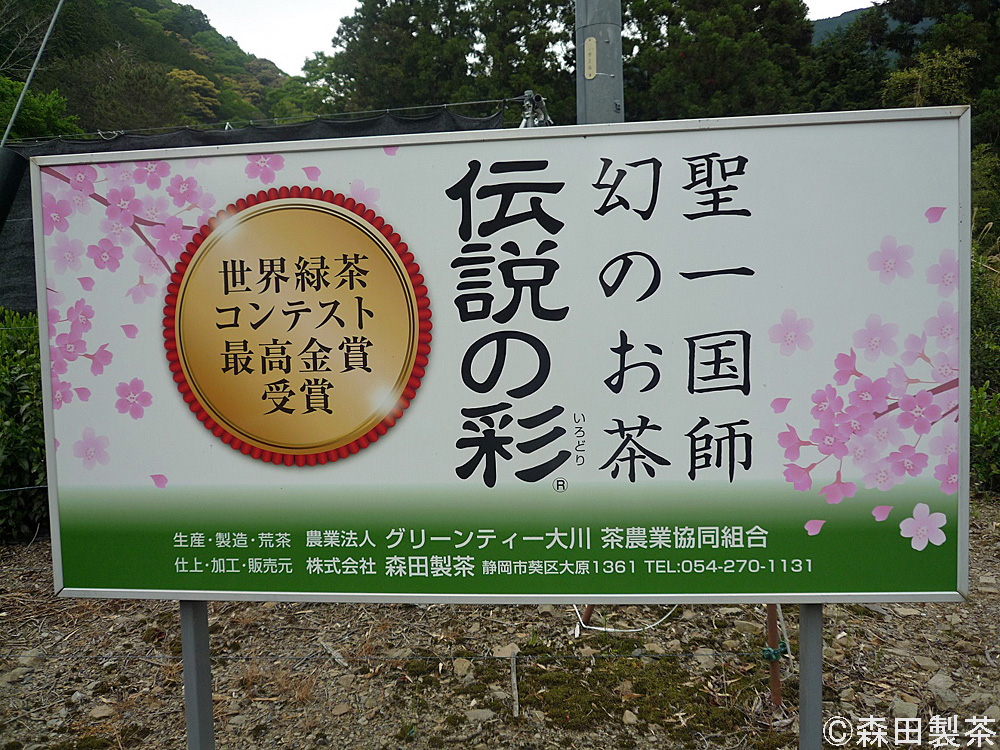
This tea is extraordinarily rare — only about 30 kilograms can be produced in an entire year. It was awarded the Grand Gold Prize at the 2014 World Green Tea Contest, and went on to win gold for three consecutive years thereafter.
— Only 30 kilograms per year? That’s astonishing.
Indeed. Harvesting requires a large team of skilled hands, each carefully plucking the leaves by hand. It is a painstaking process: even an experienced farmer can gather no more than about five kilograms in a full day’s work.
Moreover, during the tea-making process, the leaves lose additional weight when heat is applied, resulting in an even smaller final yield.
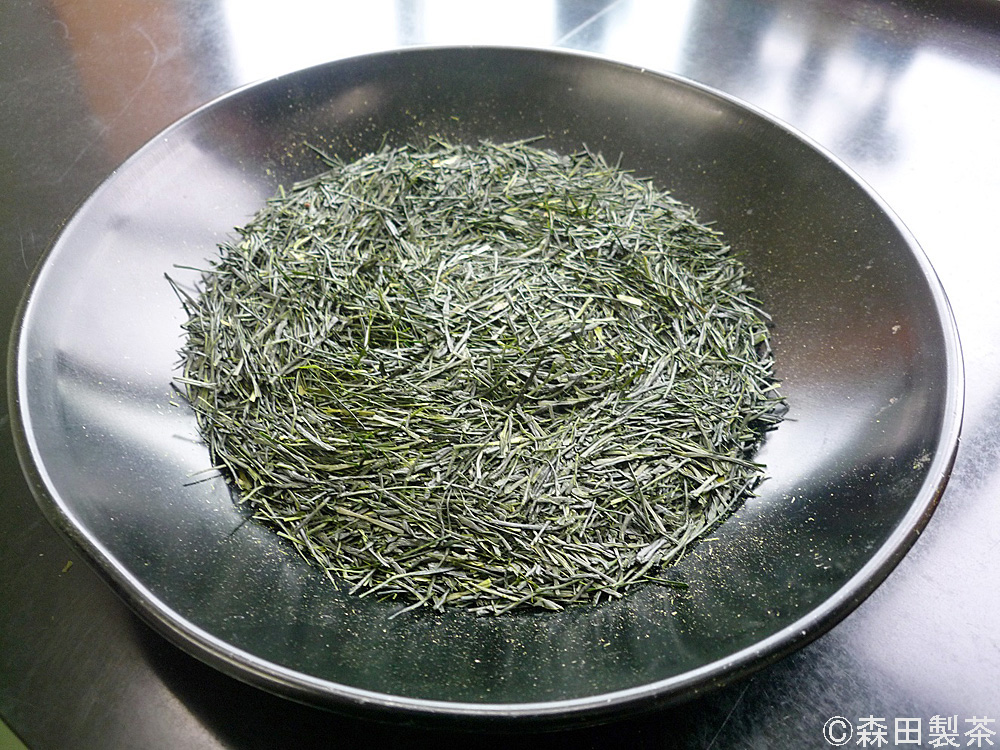 ▲Ordinarily, tea is harvested in a method called isshin nibyō, meaning “one bud and two leaves” are picked from a single stem. However, The Colours of Legend is harvested using the much rarer isshin ichiyō technique — taking only one bud and a single leaf from each stem.
At Cha no Me, we want as many people as possible to experience the profound flavour of this tea. To make that possible, we offer it in our café as part of two special tasting sets: the ‘Densetsu (Legend Set)’ and the ‘Tenkuu(Heavenly Sky) Set’.
These sets have been met with great enthusiasm, attracting guests from far and wide who come specifically to taste this remarkable tea. Through it, many also discover where Shizuoka tea truly began — and why Shizuoka’s Motoyama tea is considered the origin of all Shizuoka tea.
A Fine Tea Born in the Birthplace of Shizuoka Tea
— What exactly is Shizuoka Honyama tea?
Honyama tea refers to tea cultivated in the areas along the upper reaches of the Abe and Warashina rivers in Shizuoka City. The mountain valleys lining these rivers are often cloaked in mist, and under the gentle sunlight, the tea leaves grow slowly and tenderly.
As a result, the leaves are soft and possess a refined, delicate flavour. Moreover, the mineral-rich soil nurtures their vivid green colour, refreshing aroma, and graceful balance of sweetness and umami — qualities that define the unique character of Honyama tea.
— So, Honyama tea is the very beginning of Shizuoka tea culture.
Indeed. Around 800 years ago, during the Kamakura period, a high-ranking monk named Shoichi Kokushi, who later founded Tofuku-ji Temple in Kyoto, travelled to the Song Dynasty in China at the age of 34.
Over six years of rigorous training, he studied Buddhist teachings along with the most advanced knowledge of the time. Upon his return to Japan, he brought back tea seeds as a gift for his mother and planted them in his hometown of Motoyama.
This act is considered the origin of tea cultivation in Shizuoka. For that reason, the Motoyama region is regarded as the oldest tea-producing area in the prefecture — the birthplace of Shizuoka tea itself. In other words, Honyama tea can truly be described as the tea from the birthplace of Shizuoka tea.
–That means Honyama tea has a deep connection to the monk who first spread tea culture in Shizuoka. It’s a story that resonates not only with tea enthusiasts but with anyone who appreciates heritage and serenity.
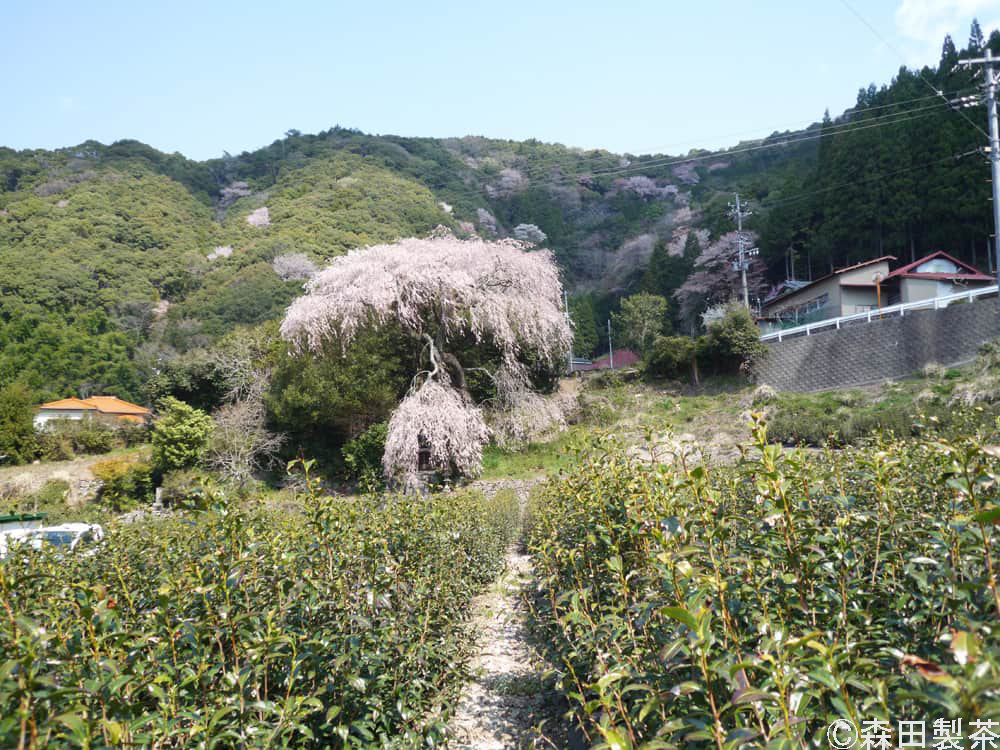 ▲At the birthplace of Shoichi Kokushi in Tochizawa, a magnificent weeping cherry tree bursts into full bloom each spring. The sight of its petals fluttering gently in the breeze is truly breathtaking.
A moment of peace wrapped in the gentle aroma of tea brewed in a Kyusu
I entered the world of tea when I was twenty, and for more than twenty years since then, I have been devoted to the craft of tea-making. During that time, the environment surrounding tea has changed dramatically.
Today, fewer people use Kyusu teapots, and the production of bottled tea now surpasses that of loose-leaf tea.
The ageing of tea farmers has also become a serious issue. Many are now over sixty-five, and in the mountainous regions of Shizuoka, the steep terrain makes farming physically demanding. As a result, the annual harvest of tea leaves has been steadily declining.
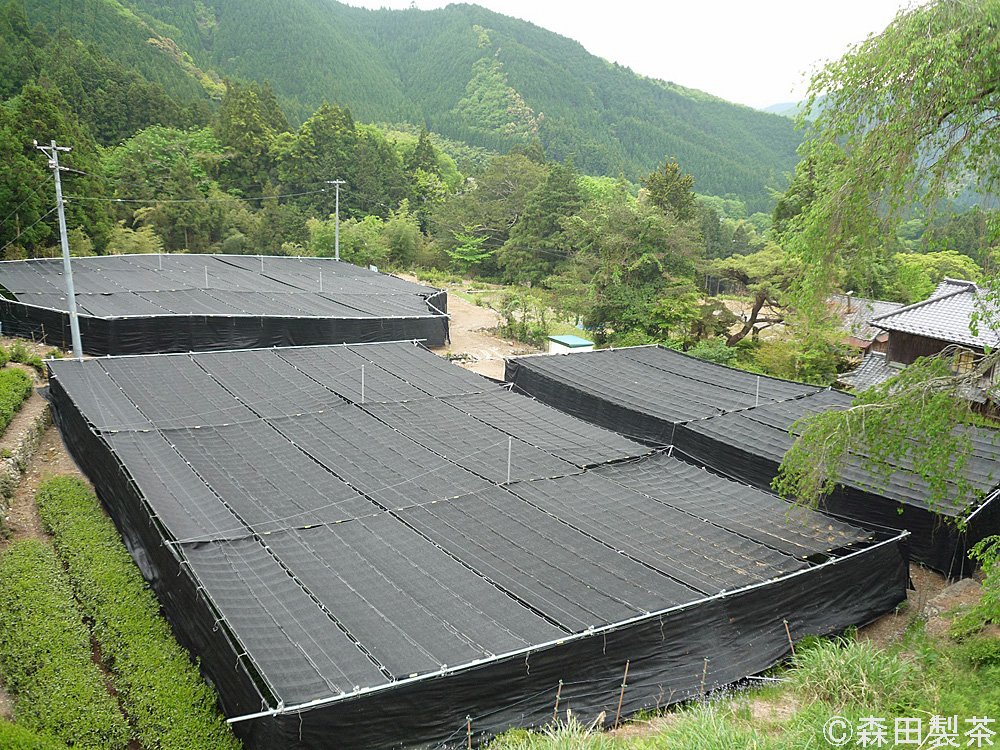
To help improve this situation, we have built strong connections among tea producers, sharing our knowledge and expertise while working together to promote the charm of tea brewed in a Kyusu.
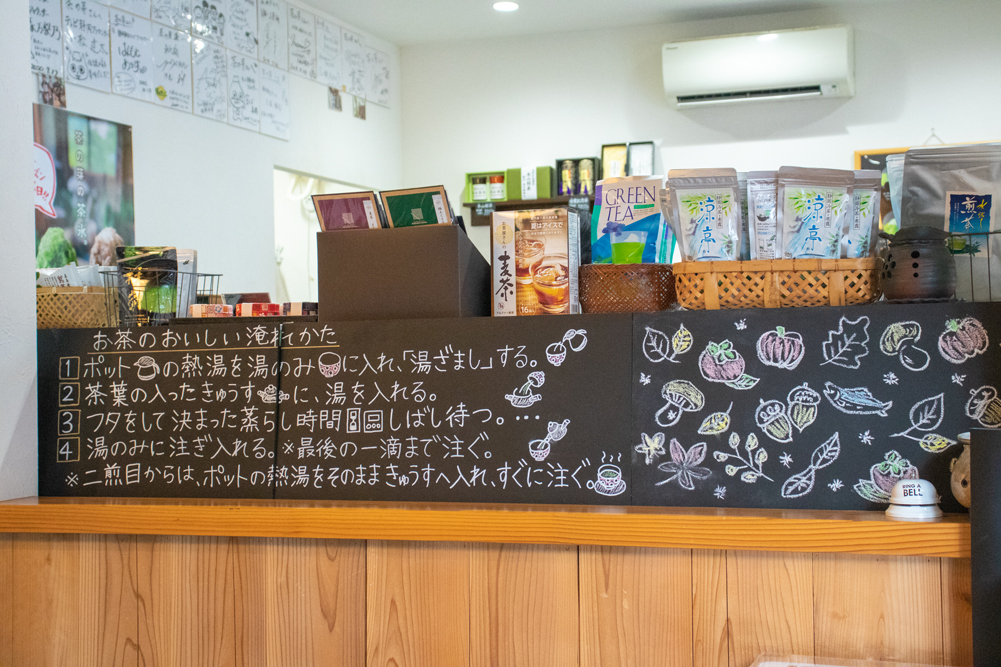
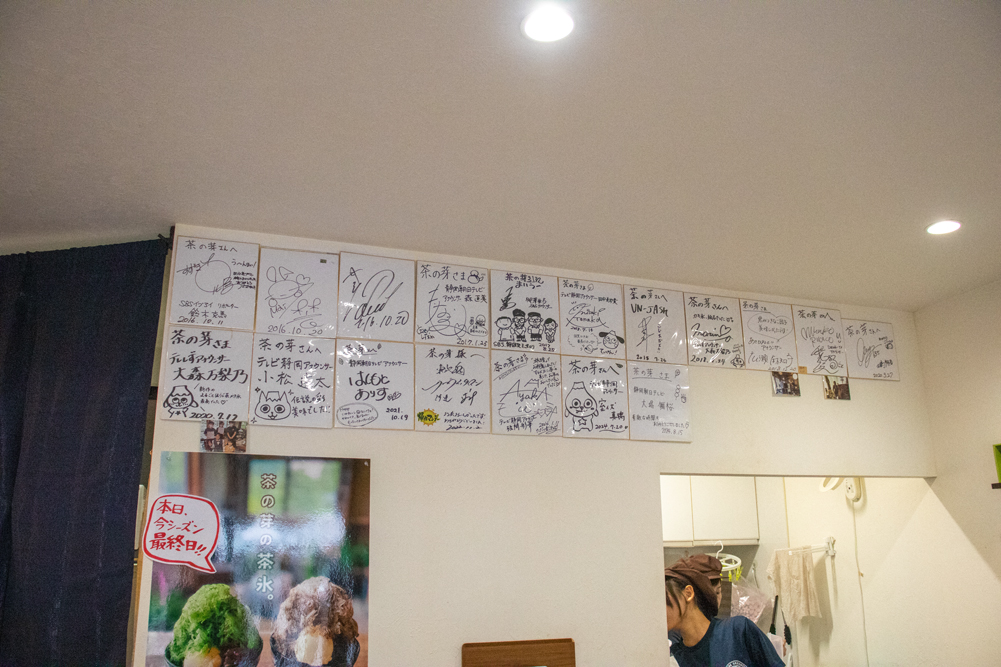 ▲The delicious flavour of our tea and the tranquil atmosphere we create have attracted attention, leading to numerous features on local television. Inside the shop, you’ll also find autographs from many well-known figures.
Through our ongoing collaboration, we continue to spread the joy of preparing tea by hand with a Kyusu.
When you brew tea yourself, it’s not only about savouring its rich flavour — it also sparks conversation, brings smiles, and nurtures a sense of warmth between people.
Amid the soft, resonant sound of the suikinkutsu echoing in our tearoom, we hope to offer you a moment of true relaxation and peace.
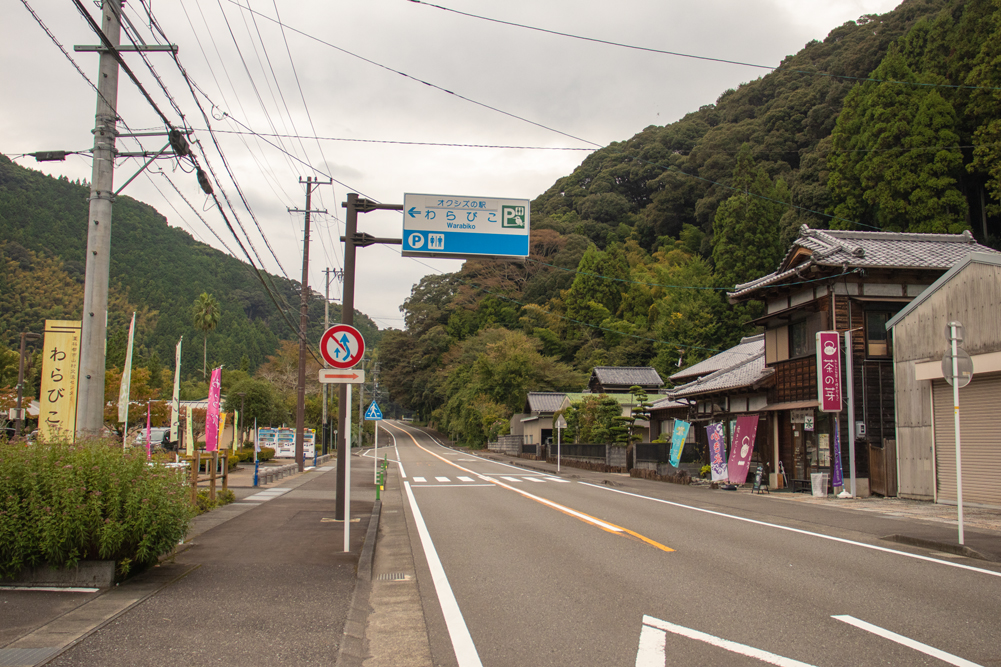
There’s also the Warashina City–Mountain Village Exchange Centre “Warabiko” located right in front of the shop. After enjoying a charcoal-grilling experience or a relaxing bath there, be sure to stop by Cha no Me as well.
Editor’s note: If you would like to explore more places in Shizuoka where Japanese tea can be experienced in person, please also see our Japanese Tea Cafés and Tea Experience Articles.
Information Of Chanome
| Address | 1827, Ohara, Aoi-ku, Shizuoka City, 421-1314, Japan |
| Website | https://www.instagram.com/cha_no_me.cafe/ |
| Phone number | +81 54-270-1313 |
| E-money and credit cards | Credit card payments not Available |
| Open | 10:00 to 17:00 |
| Closed | Mondays and the 4th Tuesdays |
| Parking lot | Available (4 cars) |
| Access | In front of Warashina City Mountain Village Interchange Center Warabiko Nearby Youchijima Bus Stop of Shizutetsu Bus Warashina LineAbout 30-minute drive via National Route 362 from Shizuoka City area toward Warashina |
| Writer | Norikazu Iwamoto |
| Career | Ochatimes chief editer. Meeting with Vice Governor of Shizuoka prefecture. Judge of Shizuoka 100 tea’s award in 2021~25. Ocha Times link introduced at website of World O-CHA(Tea) Festival 2022, Tea Science Center, The City of Green Tea Shizuoka, Ministry of Agriculture, Forestry and Fisheries. |
Related articles
-
CHA10 Delivers Organic Tea from Shizuoka to the World【Shizuoka City, Shizuoka Prefecture】
CHA10 (pronounced ‘cha-toh’), located a 5-minute walk from S...
OCHATIMES編集部
-
Experience the Flavour and History of Kawane Tea at Fore Nakakawane Chameikan【Kawanehoncho, Shizuoka Prefecture】
The Kawane region of Shizuoka Prefecture is a series of high...
OCHATIMES編集部


 on the red bar to close the slide.
 to see the
distance between the current location to the Chaya.
to see the
distance between the current location to the Chaya.